by Polly Markandya | May 6, 2021
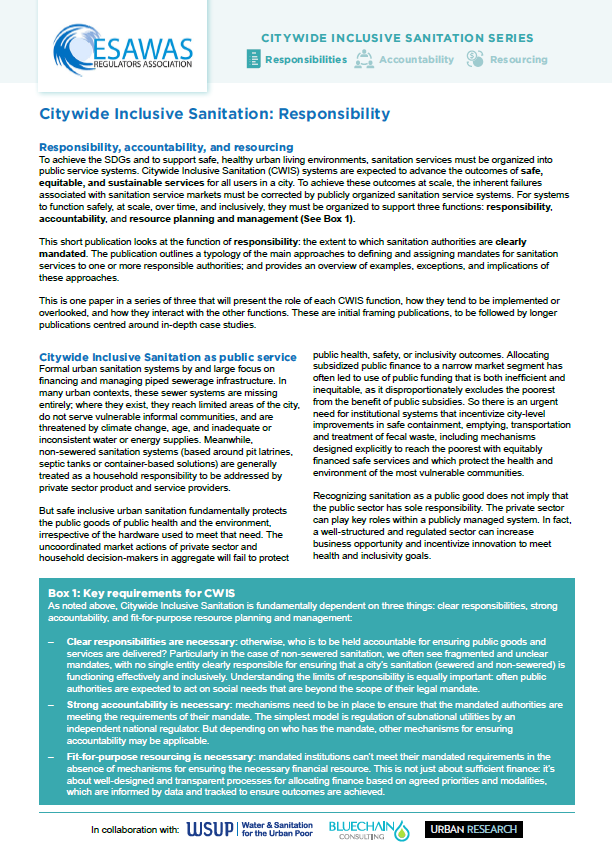
For urban sanitation systems to function safely, at scale, over time, and inclusively, they must be organized to support three functions: responsibility, accountability, and resource planning and management. This short publication looks at the function...
by Polly Markandya | Mar 5, 2021
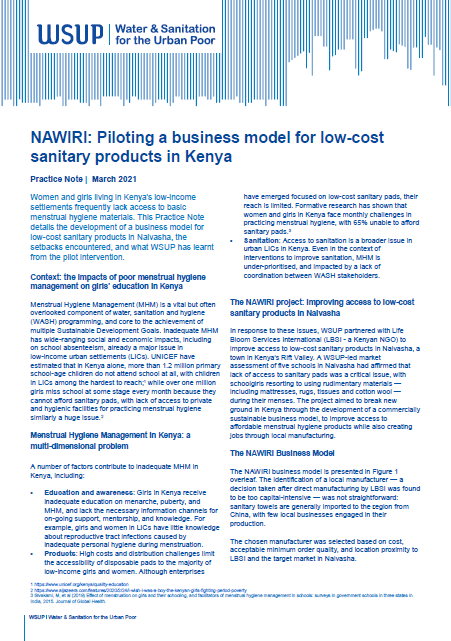
Women and girls living in Kenya’s low-income settlements frequently lack access to basic menstrual hygiene materials. This Practice Note details the development of a business model for low-cost sanitary products in Naivasha, the setbacks encountered, and what WSUP has...
by Polly Markandya | Feb 4, 2021
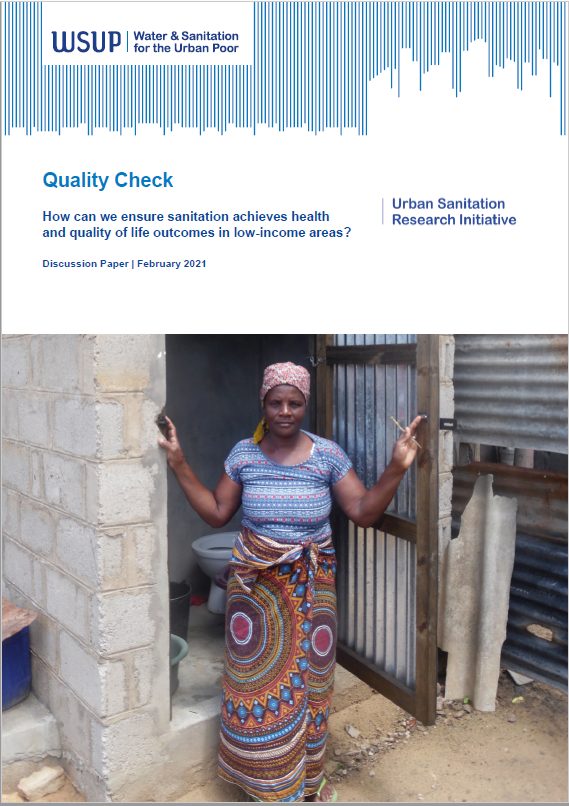
This discussion paper explores how high-quality sanitation can be achieved in low-income urban areas in developing contexts. It is based on findings from four research projects conducted under, or in association with, WSUP’s Urban Sanitation Research Initiative...
by Polly Markandya | Jan 29, 2021
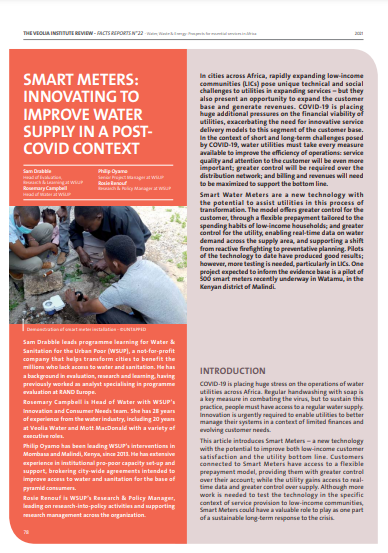
In cities across Africa, rapidly expanding low-income communities (LICs) pose unique technical and social challenges to utilities in expanding services – but they also present an opportunity to expand the customer base and generate revenues. COVID-19 is placing huge...
by Polly Markandya | Dec 8, 2020
Core to WSUP’s guiding strategy is the belief that market-based solutions will contribute significantly to sustainable progress in tackling the world’s biggest challenge: water and sanitation for all. However, financially viable business models targeting the poorest...