by Polly Markandya | Jul 26, 2021
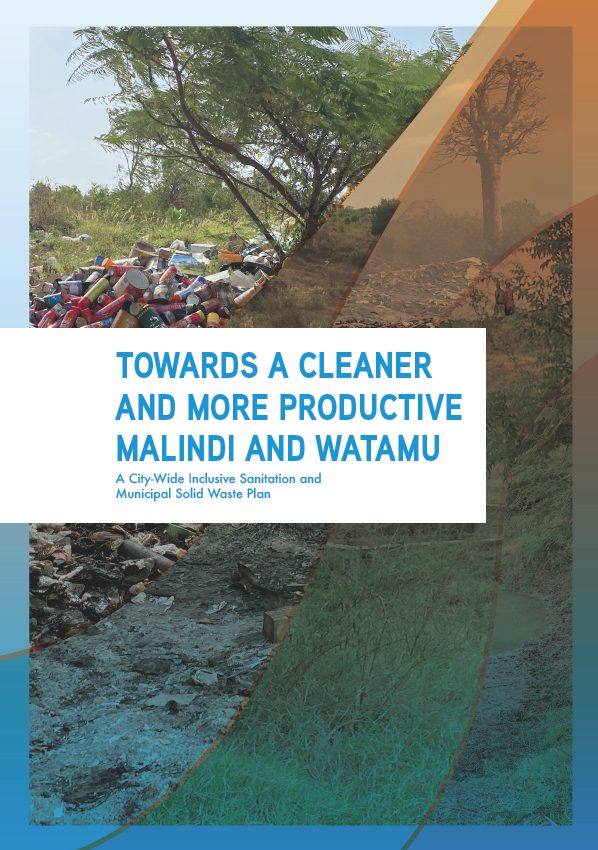
The residents of the coastal town of Malindi, popular for its beautiful beaches, largely depend on on-site sanitation. There is no waste treatment plant and only 25% of the waste is safely managed. As a result, 90% of hand dug wells are contaminated causing serious...
by Polly Markandya | Jun 30, 2021
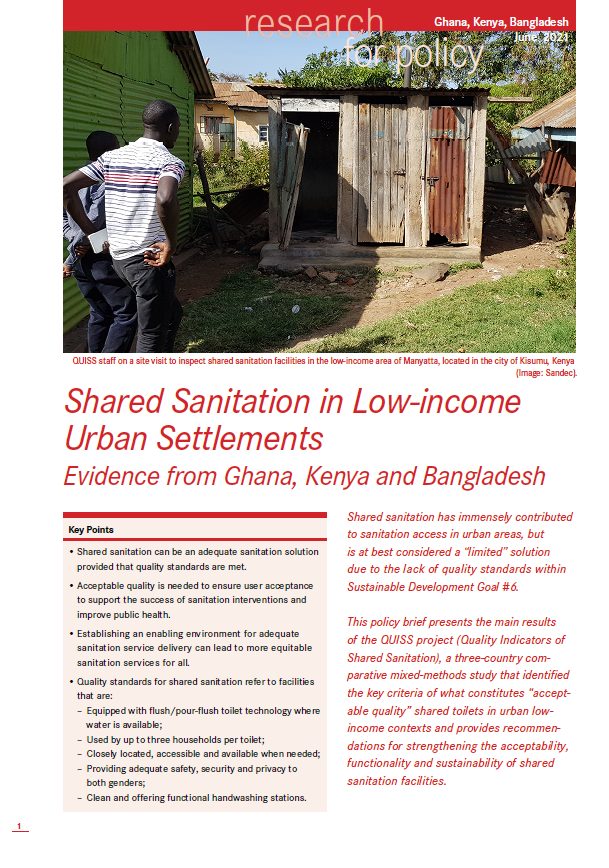
Shared sanitation has immensely contributed to sanitation access in urban areas, but is at best considered a “limited” solution due to the lack of quality standards within Sustainable Development Goal 6. This policy brief presents the main results of the QUISS project...
by Polly Markandya | May 24, 2021
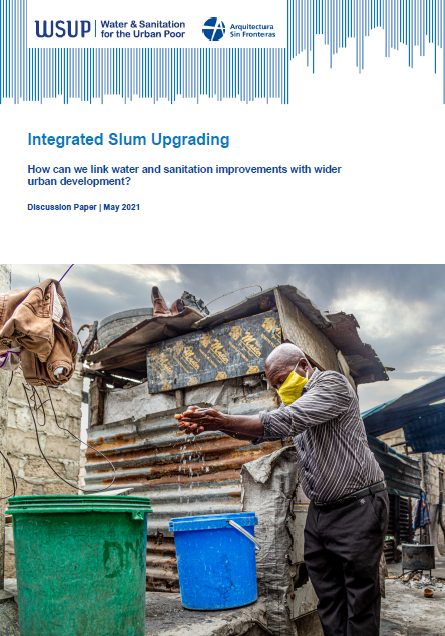
Marginalised urban communities are often characterised by three things: complexity, interdependence of challenges, and constant evolution. The sheer numbers of people living close together in poorly planned communities can make improving the quality of life extremely...
by Polly Markandya | May 6, 2021
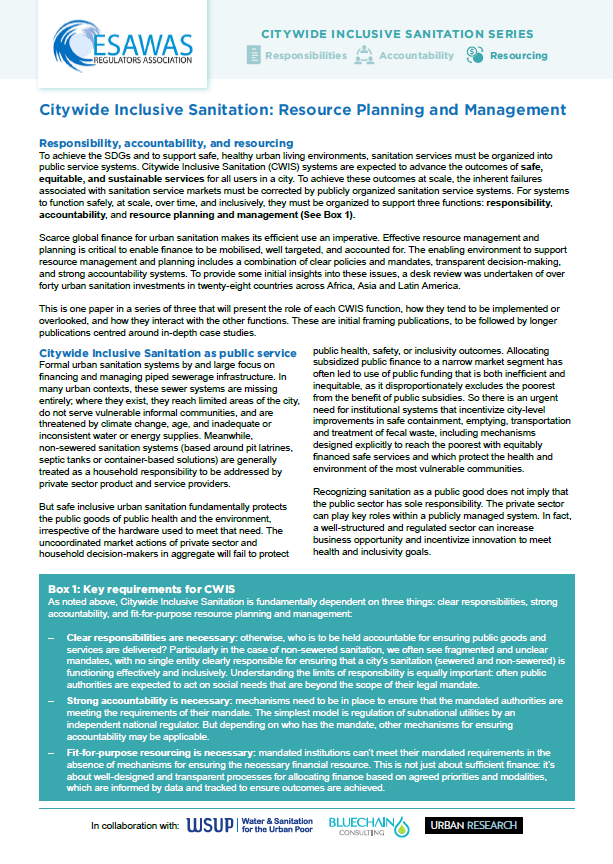
For urban sanitation systems to function safely, at scale, over time, and inclusively, they must be organized to support three functions: responsibility, accountability, and resource planning and management. This short publication looks at the function of resource...
by Polly Markandya | May 6, 2021
For urban sanitation systems to function safely, at scale, over time, and inclusively, they must be organized to support three functions: responsibility, accountability, and resource planning and management. In this paper, we explore the accountability mechanisms that...