• About us
    • Our Story
    • How we create impact
    • Why WASH matters
      • Health
      • Education
      • Employment and economy
      • Women & girls
      • Climate change
      • Environmental pollution
    • Our team
    • Accountability and financials
      • Governance
      • Financials
    • Contact us
  • Where we work
    • Bangladesh
    • Ghana
    • Kenya
    • Madagascar
    • Mozambique
    • Zambia
    • Uganda
  • Partner with us
  • Resources
    • Latest research
      • Innovative approaches to water & sanitation service delivery
      • Institutional capacity
      • Business development & public-private collaboration
      • Policy, planning & sector reform
      • Regulation
      • Financing
      • Citywide inclusive sanitation
      • Integrating water & sanitation with urban development
      • Climate resilience & water security
      • Hygiene & behaviour change
      • Gender & inclusion
      • Assessing impact
    • Sector functionality framework
    • Utility strengthening framework
    • Academic collaborations
    • WSUP’s Theory of Change
  • Advisory
    • About WSUP Advisory
    • Services
    • Areas of expertise
    • Projects
    • Meet the team
    • Contact Advisory
  • Media Centre
    • Browse all
  • Charity
    • Fundraise for WSUP
    • Pledge your birthday
    • In-memory or celebration
    • Leave a gift in your Will
  • Careers
    • Vacancies
  • About us
    • Our Story
    • How we create impact
    • Why WASH matters
      • Health
      • Education
      • Employment and economy
      • Women & girls
      • Climate change
      • Environmental pollution
    • Our team
    • Accountability and financials
      • Governance
      • Financials
    • Contact us
  • Where we work
    • Bangladesh
    • Ghana
    • Kenya
    • Madagascar
    • Mozambique
    • Zambia
    • Uganda
  • Partner with us
  • Resources
    • Latest research
      • Innovative approaches to water & sanitation service delivery
      • Institutional capacity
      • Business development & public-private collaboration
      • Policy, planning & sector reform
      • Regulation
      • Financing
      • Citywide inclusive sanitation
      • Integrating water & sanitation with urban development
      • Climate resilience & water security
      • Hygiene & behaviour change
      • Gender & inclusion
      • Assessing impact
    • Sector functionality framework
    • Utility strengthening framework
    • Academic collaborations
    • WSUP’s Theory of Change
  • Advisory
    • About WSUP Advisory
    • Services
    • Areas of expertise
    • Projects
    • Meet the team
    • Contact Advisory
  • Media Centre
    • Browse all
  • Charity
    • Fundraise for WSUP
    • Pledge your birthday
    • In-memory or celebration
    • Leave a gift in your Will
  • Careers
    • Vacancies
Comparing the costs of different urban sanitation solutions in developing cities in Africa and Asia

Comparing the costs of different urban sanitation solutions in developing cities in Africa and Asia

by Polly Markandya | Feb 12, 2018

How can city officials plan (and pay) for sanitation improvements in their municipality? This Policy Brief summarises a literature review that explored the costs of various sanitation technologies. The review indicates that conventional sewer systems are the most...
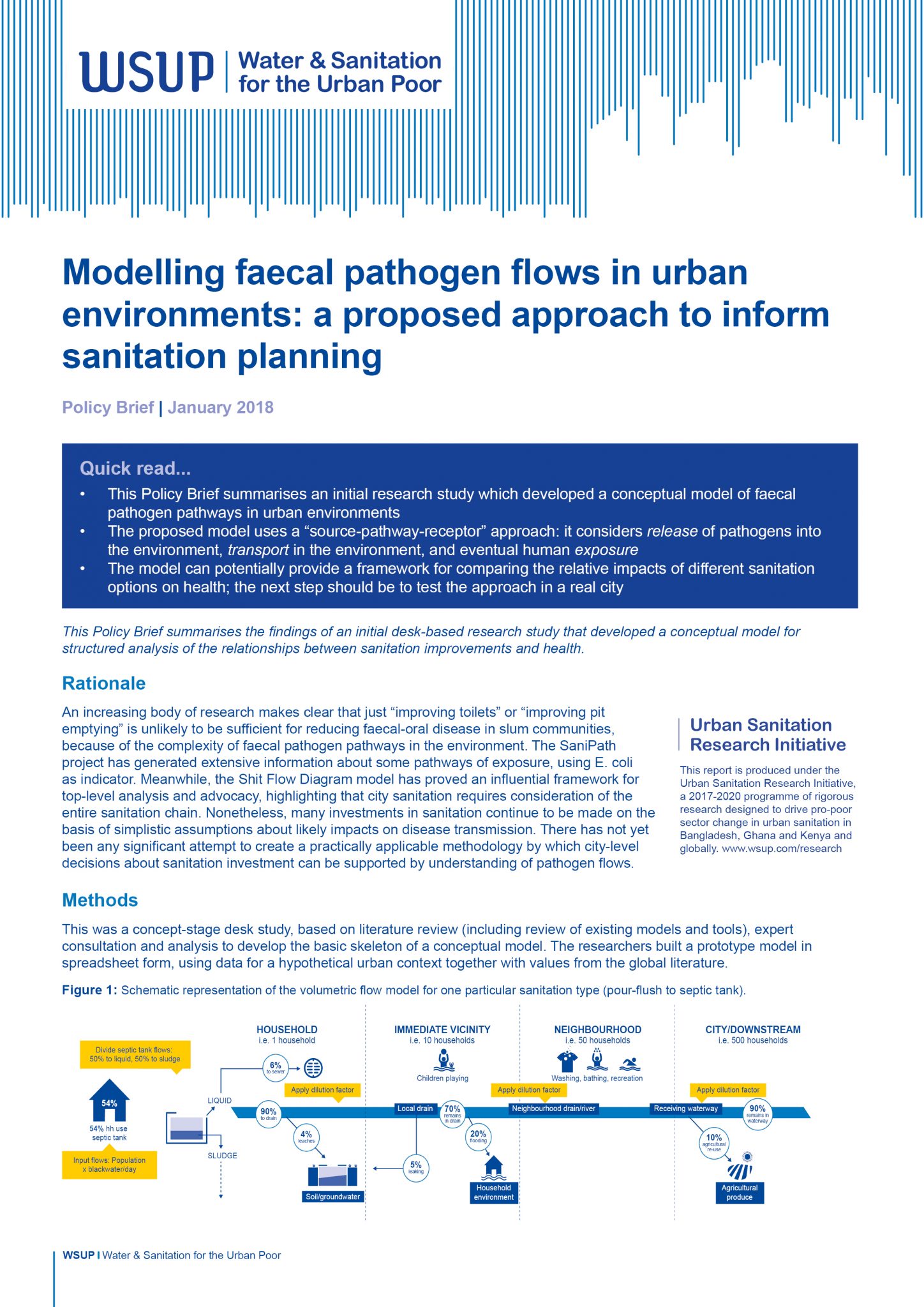
Modelling faecal pathogen flows in urban environments: a proposed approach to inform sanitation planning

Modelling faecal pathogen flows in urban environments: a proposed approach to inform sanitation planning

by Polly Markandya | Jan 31, 2018

Creating a methodology so city-level sanitation investment decisions can be supported by a better understanding of pathogen flows This Policy Brief summarises an initial research study which developed a conceptual model of faecal pathogen pathways in urban...
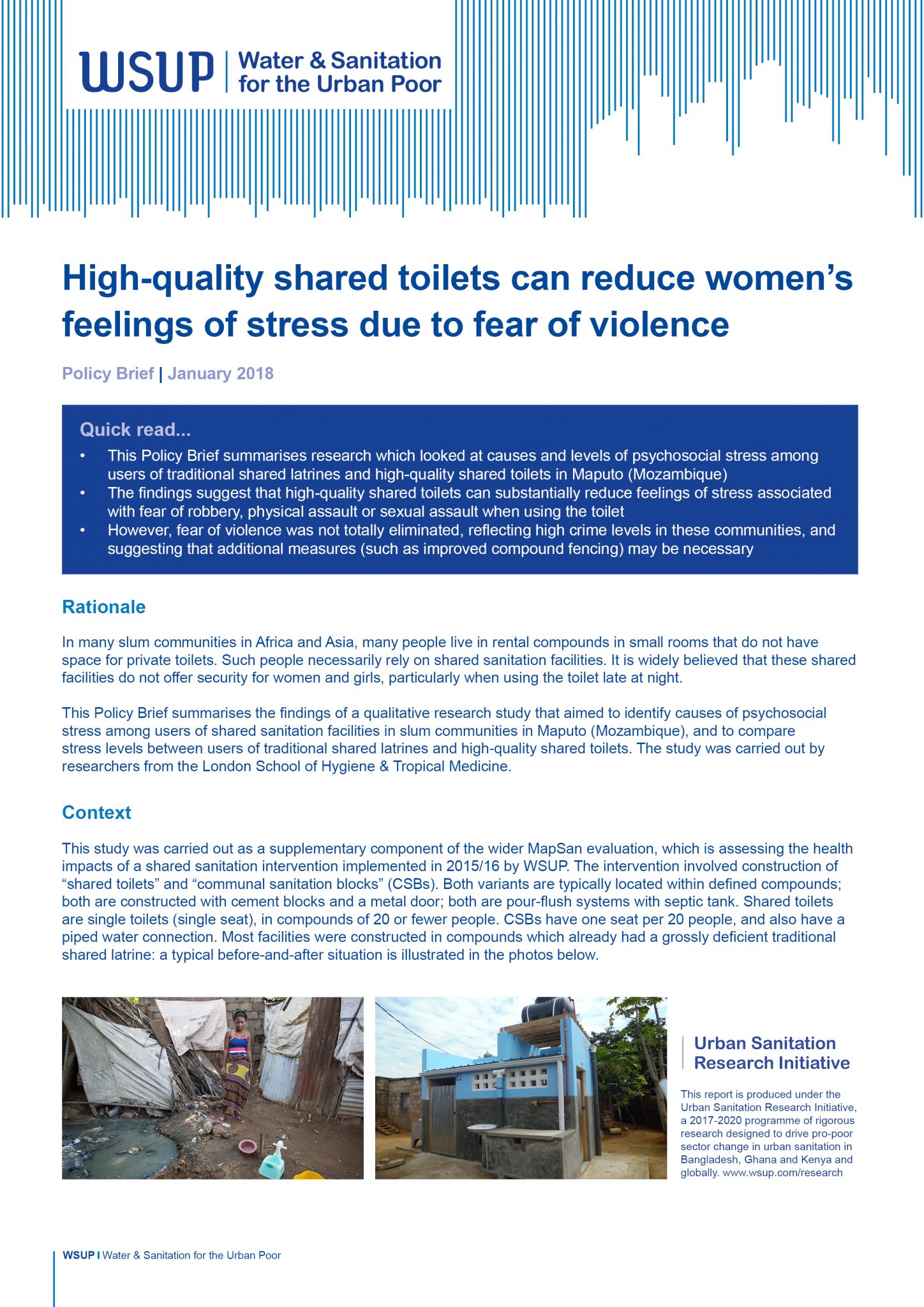
High-quality shared toilets can reduce women’s feelings of stress due to fear of violence

High-quality shared toilets can reduce women’s feelings of stress due to fear of violence

by Polly Markandya | Jan 25, 2018

Findings from the Maputo Sanitation (‘MapSan’) project in Mozambique This Policy Brief summarises the findings of a qualitative research study which looked at causes and levels of psychosocial stress among users of traditional shared latrines and...
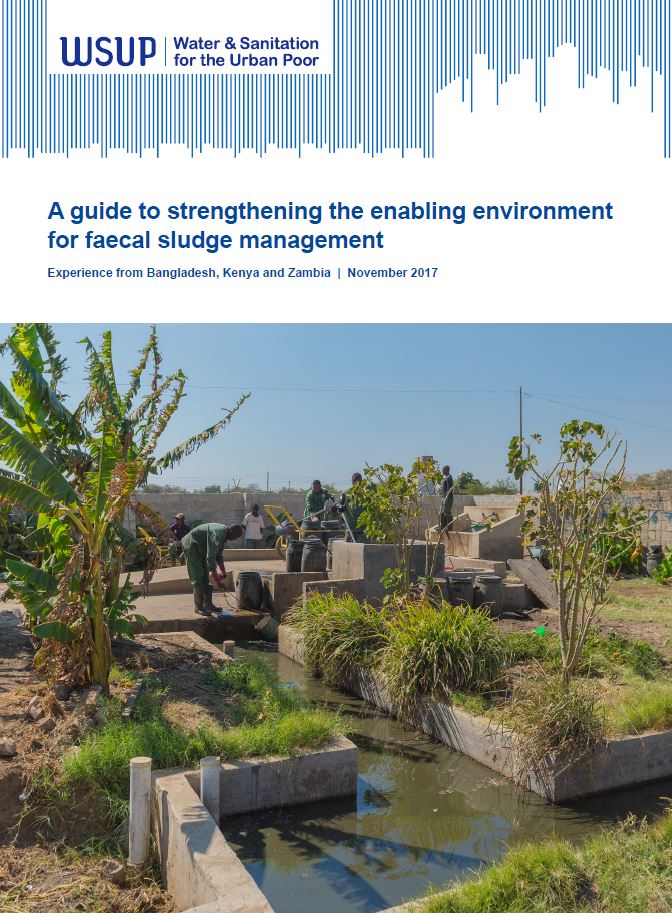
A guide to strengthening the enabling environment for faecal sludge management

A guide to strengthening the enabling environment for faecal sludge management

by Polly Markandya | Nov 16, 2017

Experience from Bangladesh, Kenya and Zambia This Guide presents an introduction to conceptualising and strengthening the enabling environment for faecal sludge management (FSM) services in low-income urban areas. It is based on WSUP’s experience working with Bill...
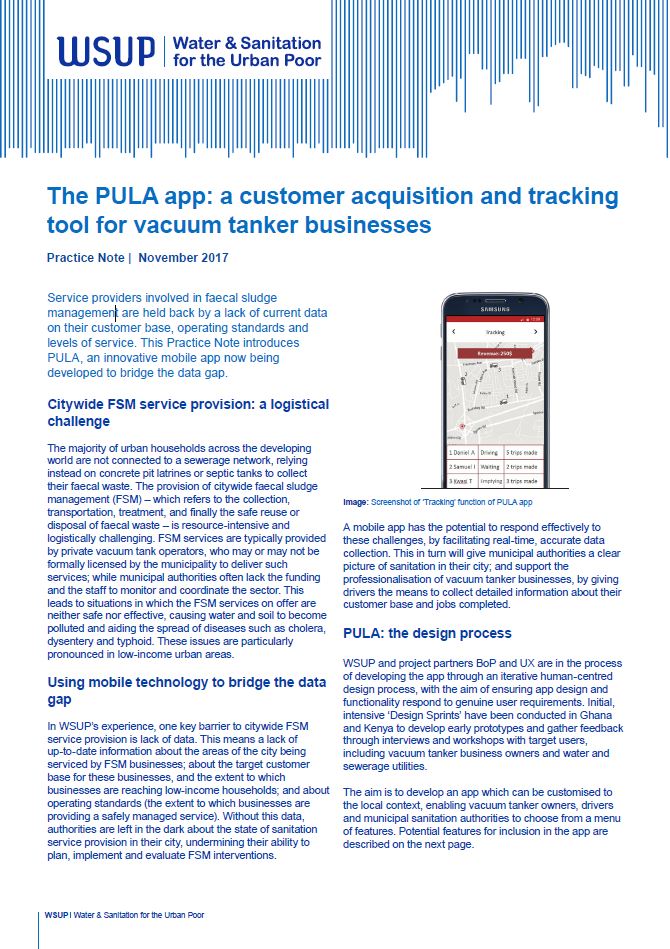
The PULA app: a customer acquisition and tracking tool for vacuum tanker businesses

The PULA app: a customer acquisition and tracking tool for vacuum tanker businesses

by Polly Markandya | Nov 13, 2017

Service providers involved in faecal sludge management (FSM) are held back by a lack of current data on their customer base, operating standards and levels of service. This Practice Note introduces PULA, an innovative mobile app now being developed to bridge the data...

Page 16 of 32« First«...10...1415161718...30...»Last »

Support our work

Donate now

Newsletter

Sign up to receive updates

Sign up

Tags

2021 africa digital Ghana groundwater Hygiene Kenya partnerships regulation Sanitation sewers smart water technology Water world water day world water week
Sign up for our Newsletter to receive all the latest WSUP news straight to your inbox

International secretariat registered at:

124 City Road, London, EC1V 2NX, UK

Companies House 05419428

WSUP Charity 1170651
  • About us
  • Where we work
  • Partner with us
  • Advisory
  • Media Centre
  • Resources
  • Careers
  • Charity




© WSUP
  • Cookie Policy
  • Privacy Notice
  • Policies
  • Report a Concern