• About us
    • Our Story
    • How we create impact
    • Why WASH matters
      • Health
      • Education
      • Employment and economy
      • Women & girls
      • Climate change
      • Environmental pollution
    • Our team
    • Accountability and financials
      • Governance
      • Financials
    • Contact us
  • Where we work
    • Bangladesh
    • Ghana
    • Kenya
    • Madagascar
    • Mozambique
    • Zambia
    • Uganda
  • Partner with us
  • Resources
    • Latest research
      • Innovative approaches to water & sanitation service delivery
      • Institutional capacity
      • Business development & public-private collaboration
      • Policy, planning & sector reform
      • Regulation
      • Financing
      • Citywide inclusive sanitation
      • Integrating water & sanitation with urban development
      • Climate resilience & water security
      • Hygiene & behaviour change
      • Gender & inclusion
      • Assessing impact
    • Sector functionality framework
    • Utility strengthening framework
    • Academic collaborations
    • WSUP’s Theory of Change
  • Advisory
    • About WSUP Advisory
    • Services
    • Areas of expertise
    • Projects
    • Meet the team
    • Contact Advisory
  • Media Centre
    • Browse all
  • Charity
    • Fundraise for WSUP
    • Pledge your birthday
    • In-memory or celebration
    • Leave a gift in your Will
  • Careers
    • Vacancies
  • About us
    • Our Story
    • How we create impact
    • Why WASH matters
      • Health
      • Education
      • Employment and economy
      • Women & girls
      • Climate change
      • Environmental pollution
    • Our team
    • Accountability and financials
      • Governance
      • Financials
    • Contact us
  • Where we work
    • Bangladesh
    • Ghana
    • Kenya
    • Madagascar
    • Mozambique
    • Zambia
    • Uganda
  • Partner with us
  • Resources
    • Latest research
      • Innovative approaches to water & sanitation service delivery
      • Institutional capacity
      • Business development & public-private collaboration
      • Policy, planning & sector reform
      • Regulation
      • Financing
      • Citywide inclusive sanitation
      • Integrating water & sanitation with urban development
      • Climate resilience & water security
      • Hygiene & behaviour change
      • Gender & inclusion
      • Assessing impact
    • Sector functionality framework
    • Utility strengthening framework
    • Academic collaborations
    • WSUP’s Theory of Change
  • Advisory
    • About WSUP Advisory
    • Services
    • Areas of expertise
    • Projects
    • Meet the team
    • Contact Advisory
  • Media Centre
    • Browse all
  • Charity
    • Fundraise for WSUP
    • Pledge your birthday
    • In-memory or celebration
    • Leave a gift in your Will
  • Careers
    • Vacancies
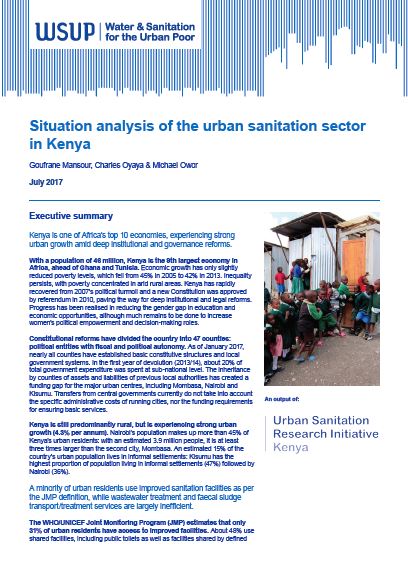
Situation analysis of the urban sanitation sector in Kenya

Situation analysis of the urban sanitation sector in Kenya

by Polly Markandya | Jul 3, 2017

This report, part of WSUP’s Urban Sanitation Research Initiative, explores the background to the urban sanitation sector in Kenya. Summary of findings: Kenya is one of Africa’s top 10 economies, experiencing strong urban growth amid deep institutional and governance...
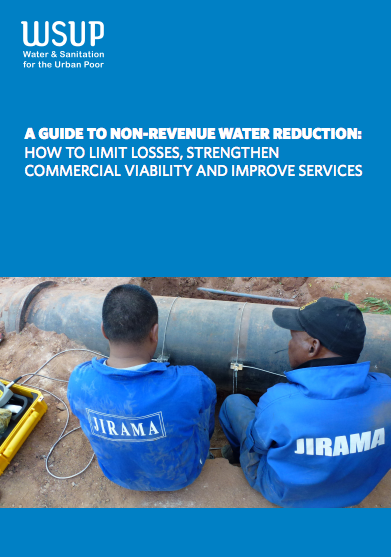
A guide to non-revenue water reduction: how to limit losses, strengthen commercial viability and improve services

A guide to non-revenue water reduction: how to limit losses, strengthen commercial viability and improve services

by Polly Markandya | May 18, 2017

This guide has been developed as a resource for water utilities to support implementation of Non-Revenue Water (NRW) reduction programmes. It covers what NRW is and why it matters, before providing systemic guidelines that can be adopted by utility managers, engineers...
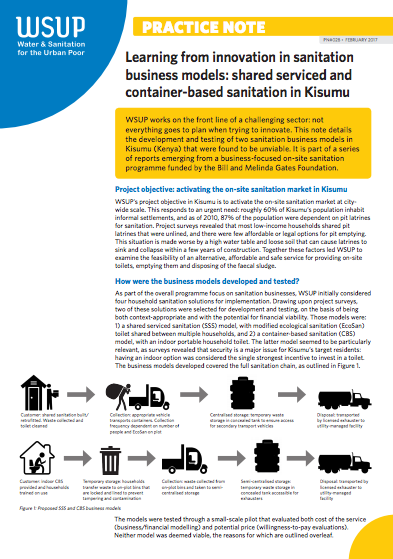
Learning from innovation in sanitation business models: shared services and container-based sanitation in Kisumu

Learning from innovation in sanitation business models: shared services and container-based sanitation in Kisumu

by Polly Markandya | Feb 18, 2017

WSUP works on the front line of a challenging sector: not everything goes to plan when trying to innovate. This note details the development and testing of two sanitation business models in Kisumu (Kenya) that were found to be unviable. It is part of a series of...
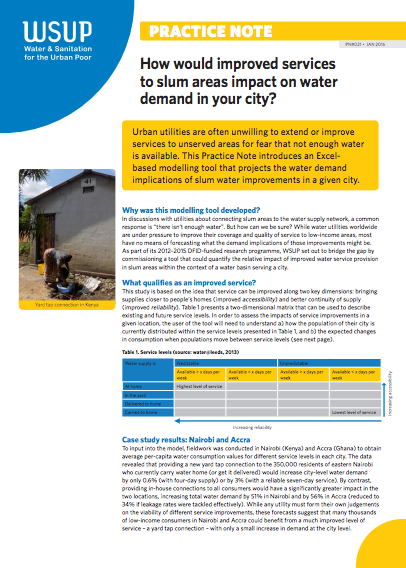
How would improved services to slum areas impact on water demand in your city?

How would improved services to slum areas impact on water demand in your city?

by Polly Markandya | Aug 18, 2016

Urban utilities are often unwilling to extend or improve services to unserved areas for fear that not enough water is available. This Practice Note introduces an Excel-based modelling tool that projects the water demand implications of slum water improvements in a...
How do improved services to slum areas impact water demand at the city level?

How do improved services to slum areas impact water demand at the city level?

by Polly Markandya | Mar 18, 2016

This Discussion Paper presents the findings of a modelling study, commissioned as part of WSUP’s 2012-2015 DFID-funded research programme and carried out by the University of Leeds.

Page 29 of 35« First«...1020...2728293031...»Last »

Support our work

Donate now

Newsletter

Sign up to receive updates

Sign up

Tags

2021 africa digital Ghana groundwater Hygiene Kenya partnerships regulation Sanitation sewers smart water technology Water world water day world water week
Sign up for our Newsletter to receive all the latest WSUP news straight to your inbox

International secretariat registered at:

124 City Road, London, EC1V 2NX, UK

Companies House 05419428

WSUP Charity 1170651
  • About us
  • Where we work
  • Partner with us
  • Advisory
  • Media Centre
  • Resources
  • Careers
  • Charity




© WSUP
  • Cookie Policy
  • Privacy Notice
  • Policies
  • Report a Concern