by Polly Markandya | Feb 12, 2018 | News
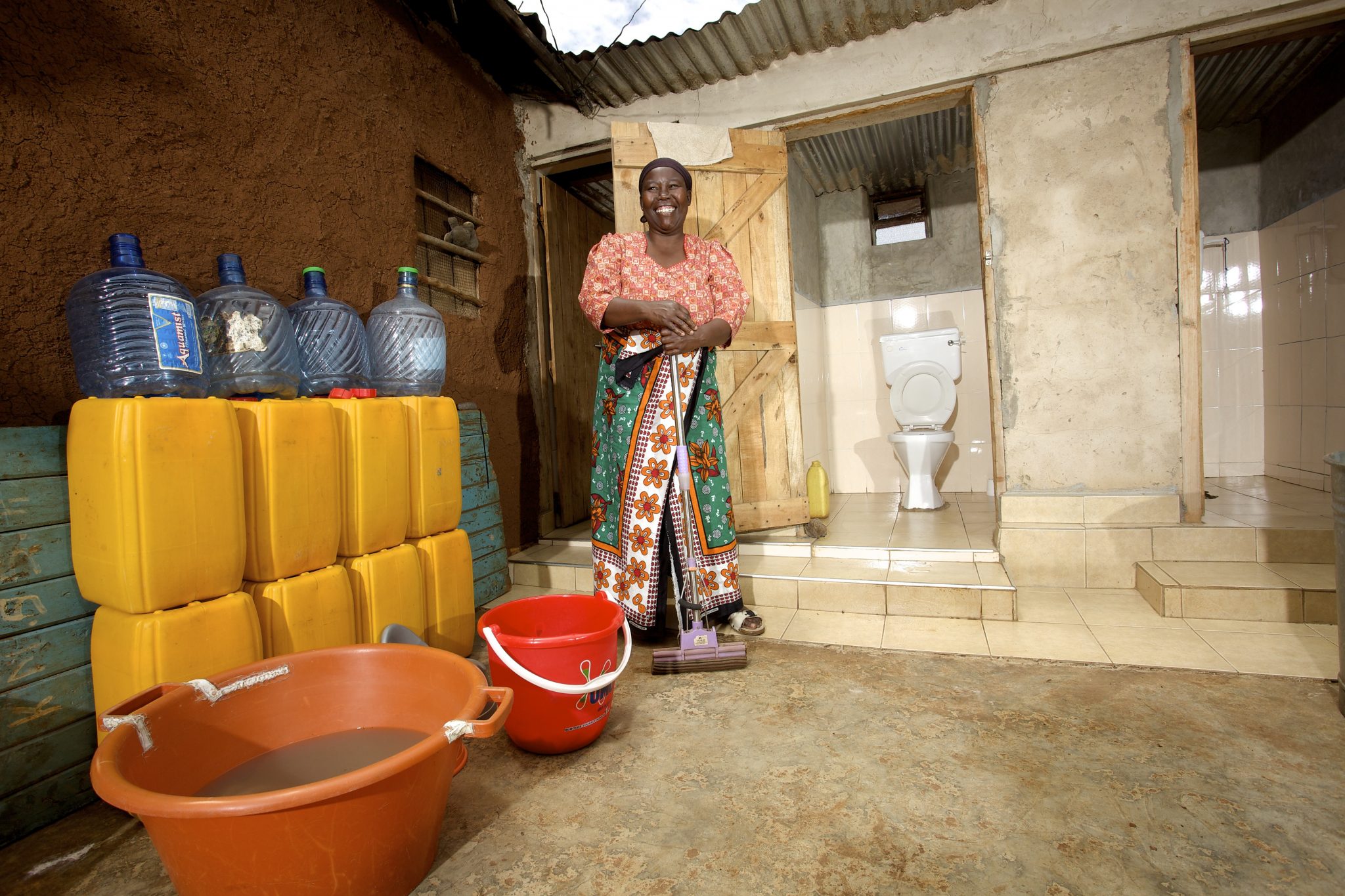
Who should pay for sanitation? The consumers who use the service, the utilities in charge of providing it, or governments who are responsible for ensuring citizens can access safe facilities? Consumers pay to connect their homes to a sewer network, utilities use that...

by Polly Markandya | Jan 29, 2018 | News
How can the private sector work with city authorities to improve sanitation for low-income customers? In Kisumu, western Kenya, WSUP is working with the city utility KIWASCO, an SME called Gasia Poa and the County Government to improve collection and treatment of...
by Polly Markandya | Nov 16, 2017
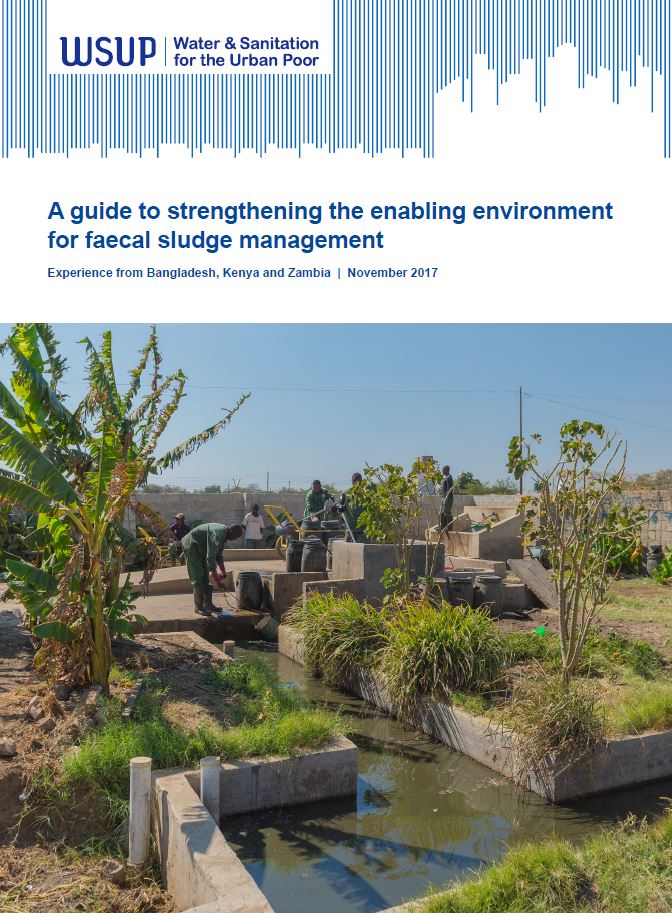
Experience from Bangladesh, Kenya and Zambia This Guide presents an introduction to conceptualising and strengthening the enabling environment for faecal sludge management (FSM) services in low-income urban areas. It is based on WSUP’s experience working with Bill...
by Polly Markandya | Nov 13, 2017
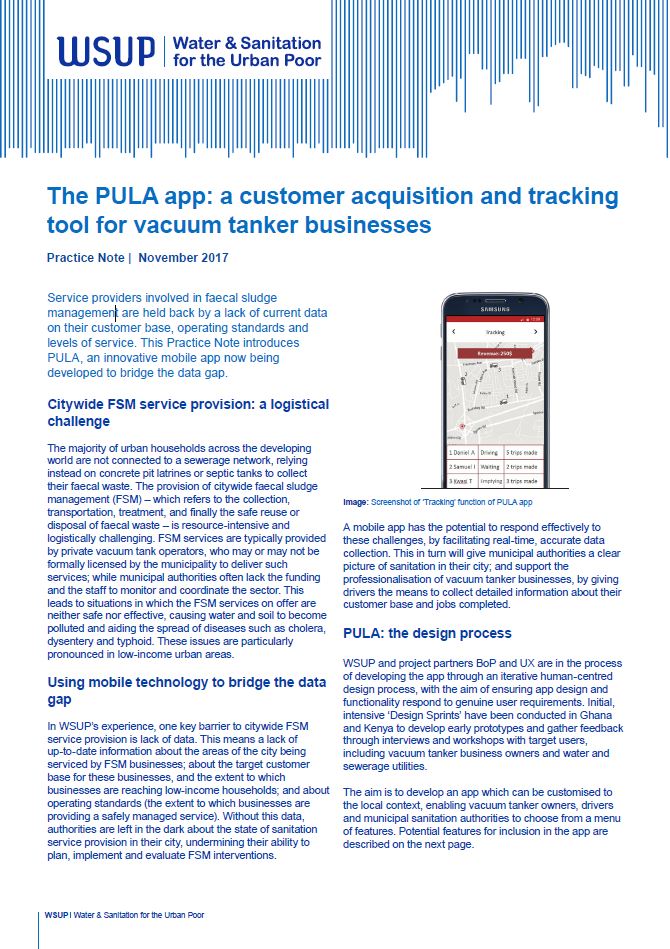
Service providers involved in faecal sludge management (FSM) are held back by a lack of current data on their customer base, operating standards and levels of service. This Practice Note introduces PULA, an innovative mobile app now being developed to bridge the data...
by Polly Markandya | Jul 10, 2017
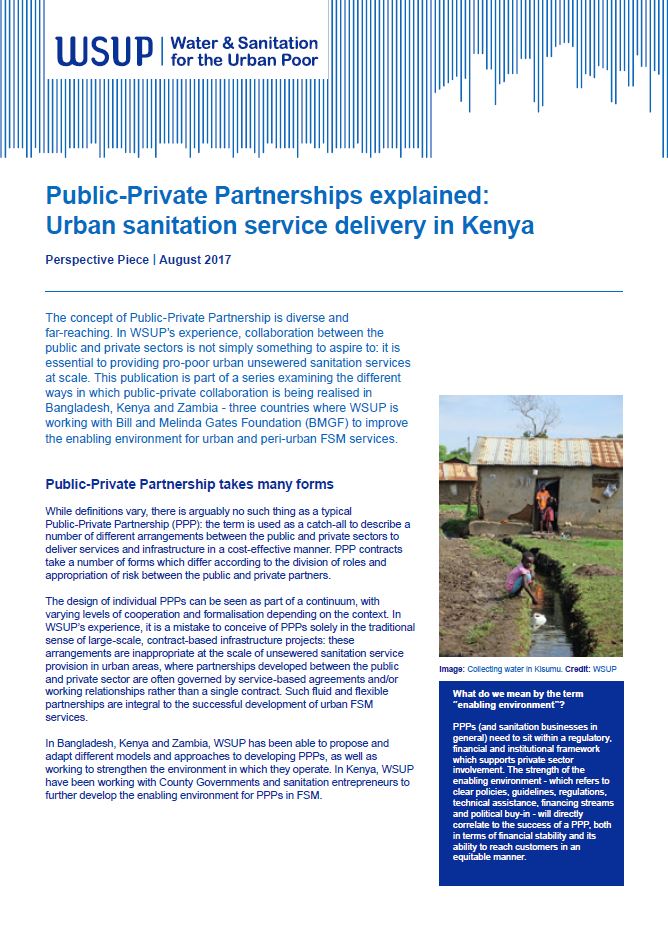
This publication is part of a series examining the different ways in which public-private collaboration is being realised in Bangladesh, Kenya and Zambia – three countries where WSUP is working with Bill and Melinda Gates Foundation (BMGF) to improve the enabling...