by Polly Markandya | May 18, 2017
A joint report by EY and WSUP. For many low-income residents in urban areas, flush toilets and connections to a piped sewer or septic system are simply not an option. Frequently the infrastructure just doesn’t exist (and may take years to come), systems are too...
by Polly Markandya | Feb 18, 2017
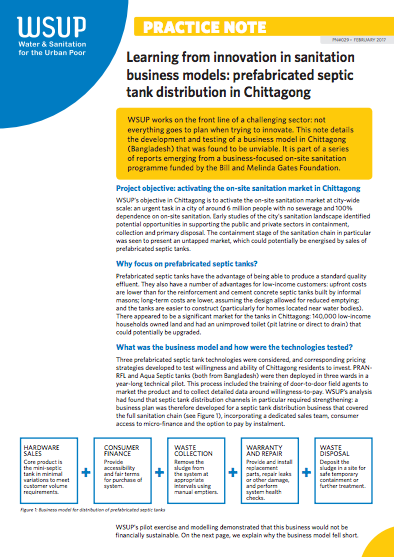
WSUP works on the front line of a challenging sector: not everything goes to plan when trying to innovate. This note details the development and testing of a business model in Chittagong (Bangladesh) that was found to be unviable. It is part of a series of reports...
by Polly Markandya | Feb 18, 2017
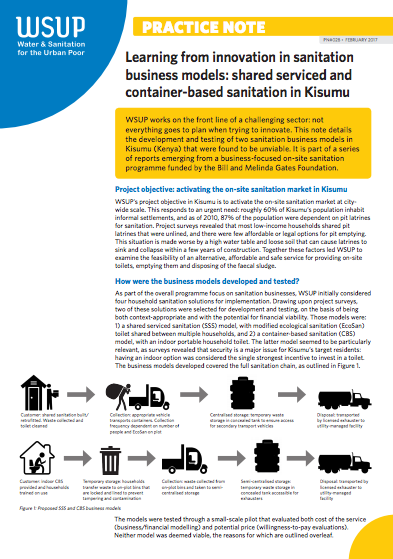
WSUP works on the front line of a challenging sector: not everything goes to plan when trying to innovate. This note details the development and testing of two sanitation business models in Kisumu (Kenya) that were found to be unviable. It is part of a series of...

by Polly Markandya | Jan 18, 2015
Despite the acknowledged importance of on-site sanitation, examples of safe and commercially viable faecal sludge management (FSM) services remain few and far between. This Topic Brief sets out the process and learning from a recent project – completed with funding...
by Polly Markandya | Jul 17, 2014
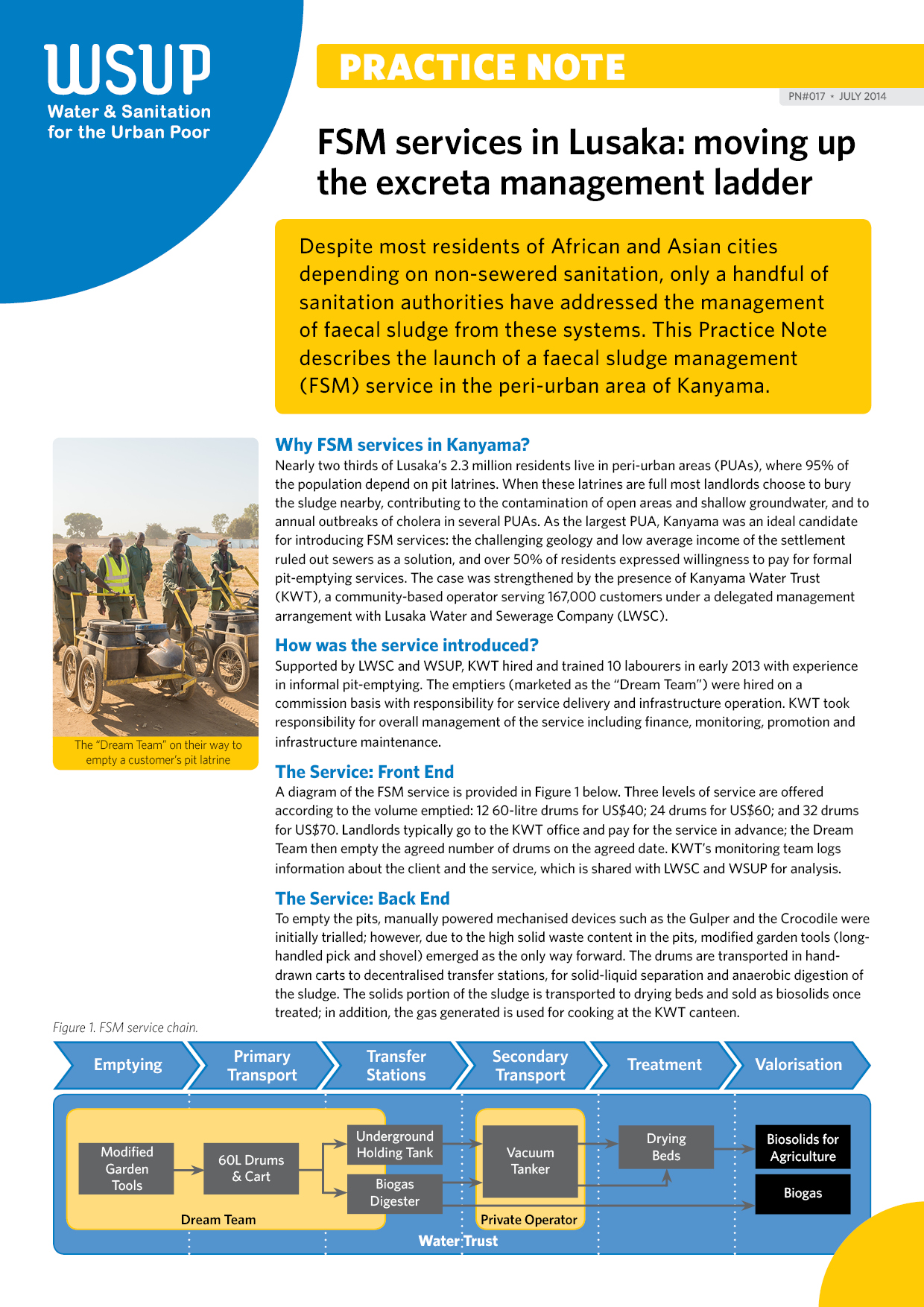
Despite most residents of African and Asian cities depending on non-sewered sanitation, only a handful of sanitation authorities have addressed the management of faecal sludge from these systems. This Practice Note describes the launch of a faecal sludge management...