• About us
    • Our Story
    • How we create impact
    • Why WASH matters
      • Health
      • Education
      • Employment and economy
      • Women & girls
      • Climate change
      • Environmental pollution
    • Our team
    • Accountability and financials
      • Governance
      • Financials
    • Contact us
  • Where we work
    • Bangladesh
    • Ghana
    • Kenya
    • Madagascar
    • Mozambique
    • Zambia
    • Uganda
  • Partner with us
  • Resources
    • Latest research
      • Innovative approaches to water & sanitation service delivery
      • Institutional capacity
      • Business development & public-private collaboration
      • Policy, planning & sector reform
      • Regulation
      • Financing
      • Citywide inclusive sanitation
      • Integrating water & sanitation with urban development
      • Climate resilience & water security
      • Hygiene & behaviour change
      • Gender & inclusion
      • Assessing impact
    • Sector functionality framework
    • Utility strengthening framework
    • Academic collaborations
    • WSUP’s Theory of Change
  • Advisory
    • About WSUP Advisory
    • Services
    • Areas of expertise
    • Projects
    • Meet the team
    • Contact Advisory
  • Media Centre
    • Browse all
  • Charity
    • Fundraise for WSUP
    • Pledge your birthday
    • In-memory or celebration
    • Leave a gift in your Will
  • Careers
    • Vacancies
  • About us
    • Our Story
    • How we create impact
    • Why WASH matters
      • Health
      • Education
      • Employment and economy
      • Women & girls
      • Climate change
      • Environmental pollution
    • Our team
    • Accountability and financials
      • Governance
      • Financials
    • Contact us
  • Where we work
    • Bangladesh
    • Ghana
    • Kenya
    • Madagascar
    • Mozambique
    • Zambia
    • Uganda
  • Partner with us
  • Resources
    • Latest research
      • Innovative approaches to water & sanitation service delivery
      • Institutional capacity
      • Business development & public-private collaboration
      • Policy, planning & sector reform
      • Regulation
      • Financing
      • Citywide inclusive sanitation
      • Integrating water & sanitation with urban development
      • Climate resilience & water security
      • Hygiene & behaviour change
      • Gender & inclusion
      • Assessing impact
    • Sector functionality framework
    • Utility strengthening framework
    • Academic collaborations
    • WSUP’s Theory of Change
  • Advisory
    • About WSUP Advisory
    • Services
    • Areas of expertise
    • Projects
    • Meet the team
    • Contact Advisory
  • Media Centre
    • Browse all
  • Charity
    • Fundraise for WSUP
    • Pledge your birthday
    • In-memory or celebration
    • Leave a gift in your Will
  • Careers
    • Vacancies
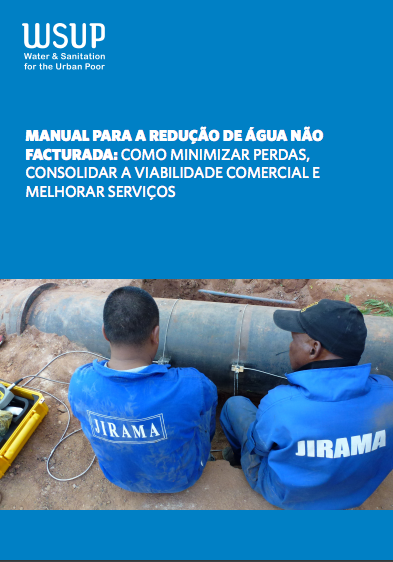
Manual para a redução de água não facturada: como minimizar perdas, consolidar a viabilidade commercial e melhorar serviços

Manual para a redução de água não facturada: como minimizar perdas, consolidar a viabilidade commercial e melhorar serviços

by Polly Markandya | Jan 18, 2017

Este guia foi desenvolvido como um recurso para utilitários de água para apoiar a implementação de programas de redução de água não-receita (NRW). Abrange o que é NRW e por que isso importa, antes de fornecer diretrizes sistêmicas que podem ser adotadas por gerentes...
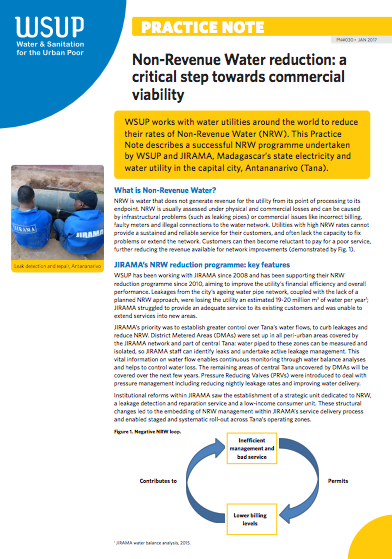
Non-revenue water reduction in Antananarivo: a critical step towards commercial viability

Non-revenue water reduction in Antananarivo: a critical step towards commercial viability

by Polly Markandya | Jan 18, 2017

WSUP works with water utilities around the world to reduce their rates of Non-Revenue Water (NRW). This Practice Note describes a successful NRW programme undertaken by WSUP and JIRAMA, Madagascar’s state electricity and water utility in the capital city,...
How would improved services to slum areas impact on water demand in your city?

How would improved services to slum areas impact on water demand in your city?

by Polly Markandya | Aug 18, 2016

Urban utilities are often unwilling to extend or improve services to unserved areas for fear that not enough water is available. This Practice Note introduces an Excel-based modelling tool that projects the water demand implications of slum water improvements in a...
How do improved services to slum areas impact water demand at the city level?

How do improved services to slum areas impact water demand at the city level?

by Polly Markandya | Mar 18, 2016

This Discussion Paper presents the findings of a modelling study, commissioned as part of WSUP’s 2012-2015 DFID-funded research programme and carried out by the University of Leeds.
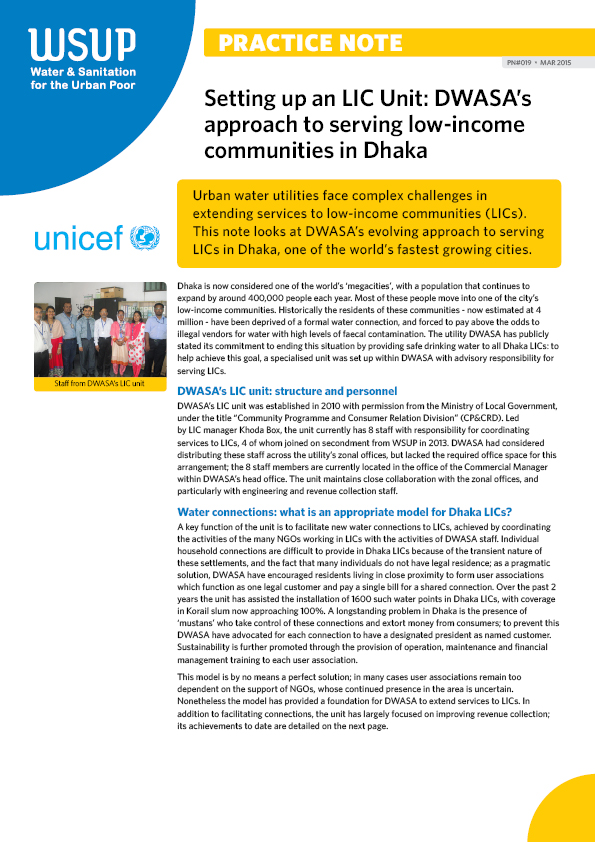
Setting up an LIC unit: DWASA’s approach to serving low-income communities in Dhaka

Setting up an LIC unit: DWASA’s approach to serving low-income communities in Dhaka

by Polly Markandya | Mar 17, 2015

Urban water utilities face complex challenges in extending services to low-income communities (LICs). This Practice Note looks at DWASA’s evolving approach to serving LICs in Dhaka, one of the world’s fastest growing cities.

Page 24 of 28« First«...10...2223242526...»Last »

Support our work

Donate now

Newsletter

Sign up to receive updates

Sign up

Tags

2021 africa digital Ghana groundwater Hygiene Kenya partnerships regulation Sanitation sewers smart water technology Water world water day world water week
Sign up for our Newsletter to receive all the latest WSUP news straight to your inbox

International secretariat registered at:

124 City Road, London, EC1V 2NX, UK

Companies House 05419428

WSUP Charity 1170651
  • About us
  • Where we work
  • Partner with us
  • Advisory
  • Media Centre
  • Resources
  • Careers
  • Charity




© WSUP
  • Cookie Policy
  • Privacy Notice
  • Policies
  • Report a Concern