by Polly Markandya | Feb 8, 2021
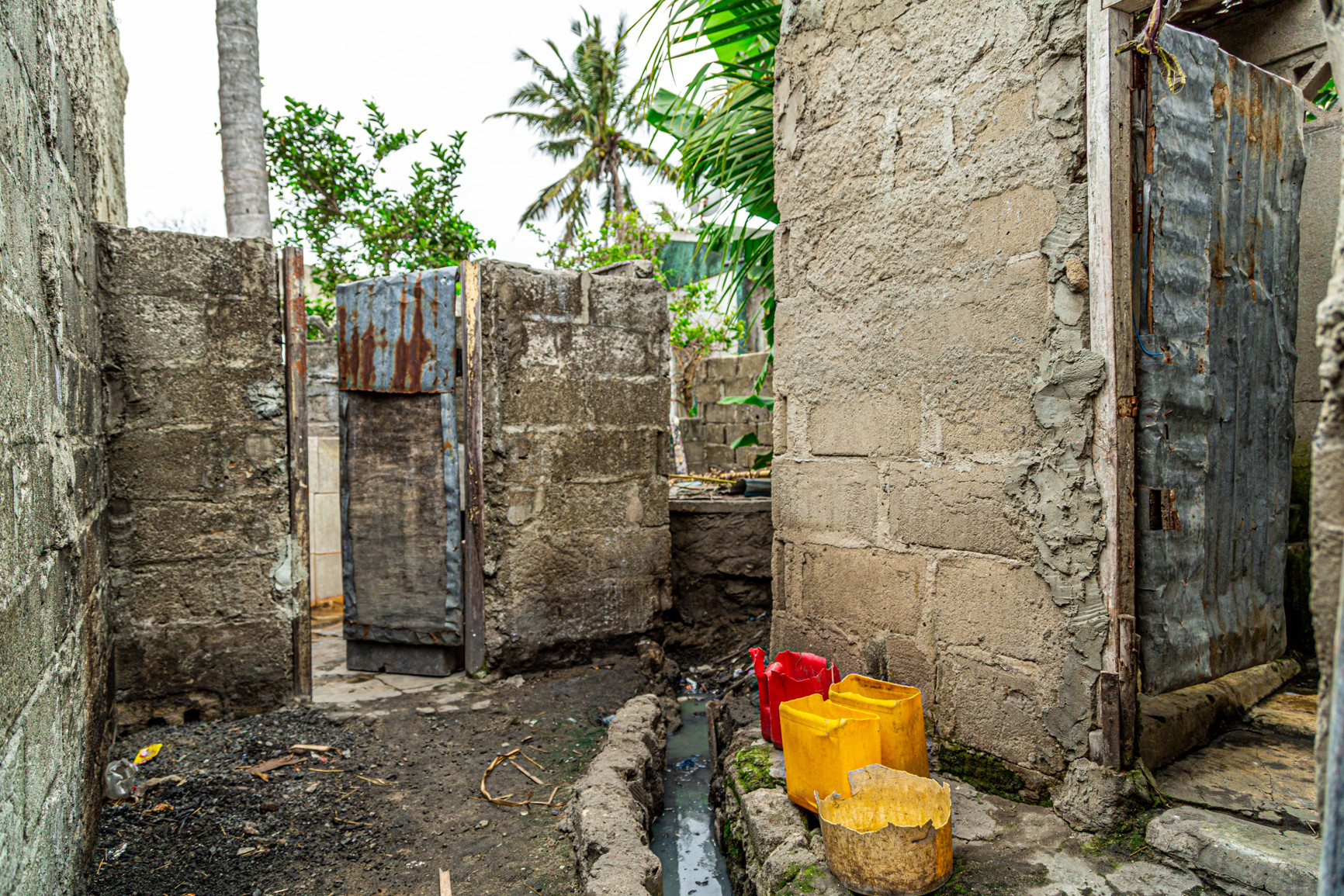
By Sam Drabble, Head of Evaluation, Research & Learning Broadly speaking, when we advocate for investment in sanitation, it is because we are trying to achieve two critically important aims: improve human health, and improve wellbeing or quality of life. But to...
by Polly Markandya | Feb 4, 2021
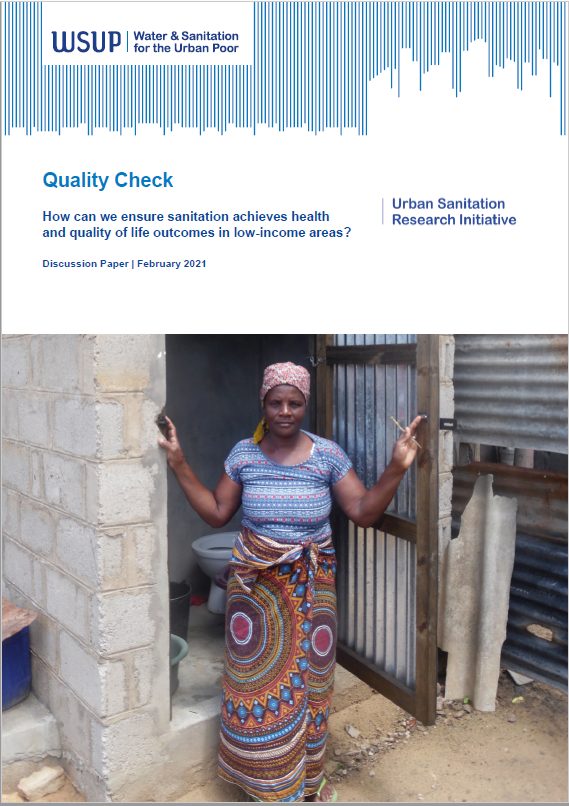
This discussion paper explores how high-quality sanitation can be achieved in low-income urban areas in developing contexts. It is based on findings from four research projects conducted under, or in association with, WSUP’s Urban Sanitation Research Initiative...
by Polly Markandya | Aug 22, 2020
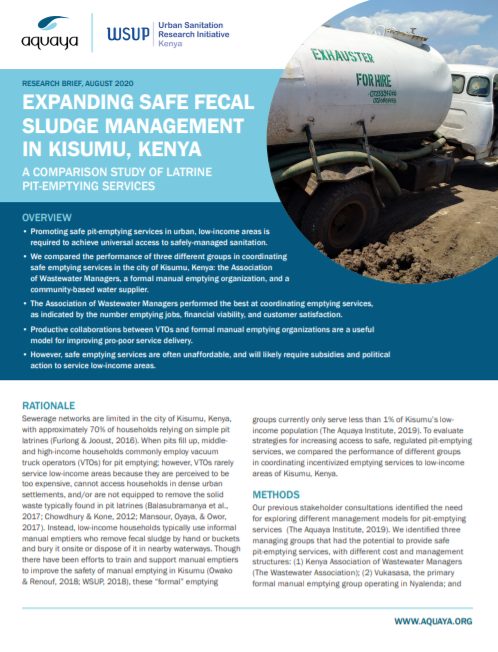
Promoting safe pit-emptying services in urban, low-income areas is required to achieve universal access to safely-managed sanitation. To evaluate strategies for increasing access to safe, regulated pit-emptying services, this study compared the performance of...
by Polly Markandya | Aug 21, 2020
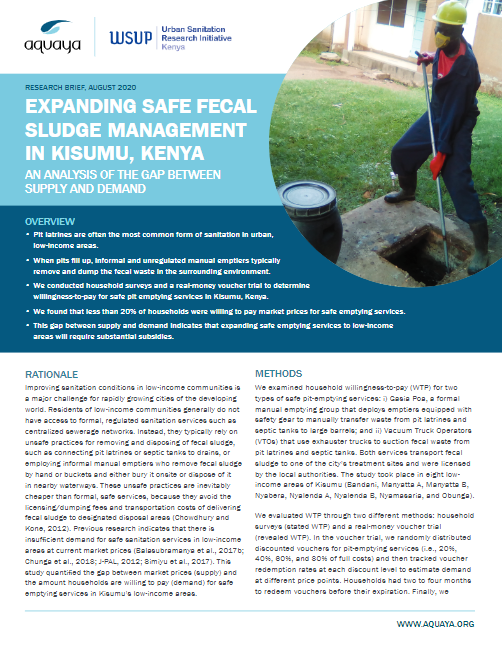
Improving sanitation conditions in low-income communities is a major challenge for rapidly growing cities of the developing world. Residents of low-income communities generally do not have access to formal, regulated sanitation services such as centralized sewerage...
by Polly Markandya | May 20, 2020
Gender inequity at the level of policy, regulation and management limits the voice and participation of women decision-makers and can perpetuate inequities throughout the sanitation sector. To address this, the Urban Sanitation Research Initiative aims to analyse...