by Polly Markandya | Mar 22, 2018
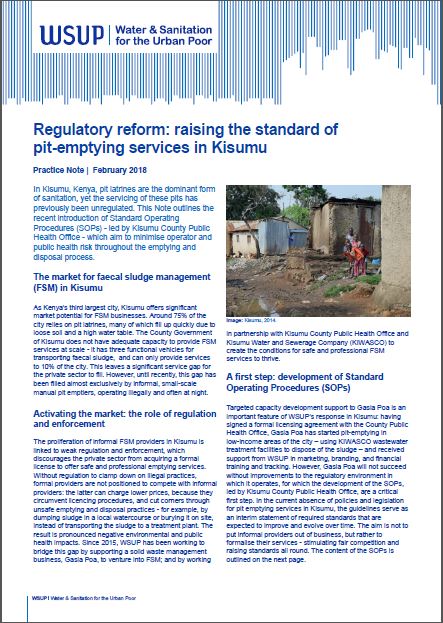
In Kisumu, Kenya, pit latrines are the dominant form of sanitation, yet the servicing of these pits has previously been unregulated. This Note outlines the recent introduction of Standard Operating Procedures (SOPs) – led by Kisumu County Public Health Office...
by Polly Markandya | Mar 21, 2018 | News
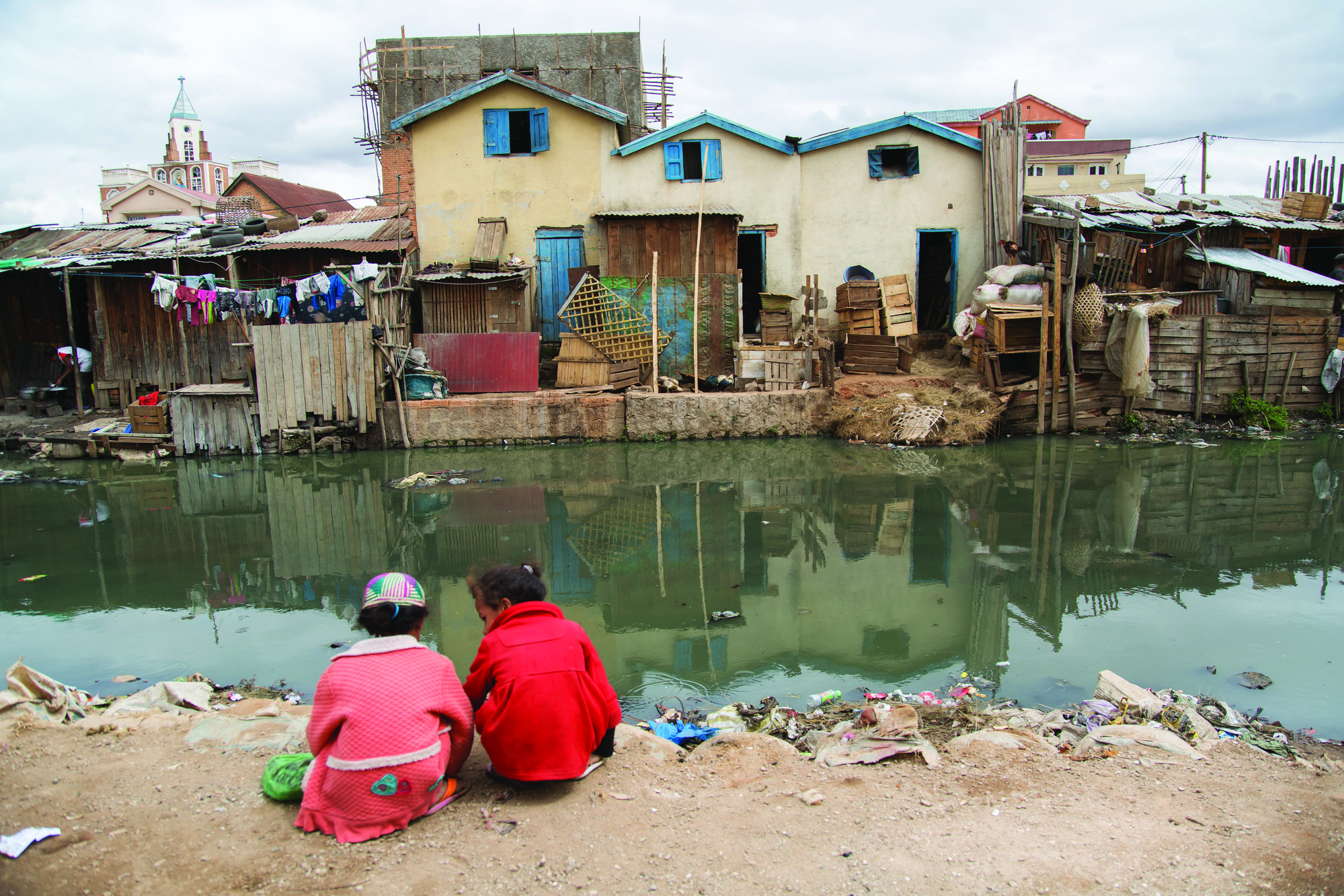
By Rosemary Campbell, Head of Water This week we are celebrating World Water Day, and the theme of this year’s campaign is Nature for Water. This might not sound immediately relevant to WSUP’s work in some of the world’s largest and most densely populated cities, but...
by Polly Markandya | Mar 16, 2018
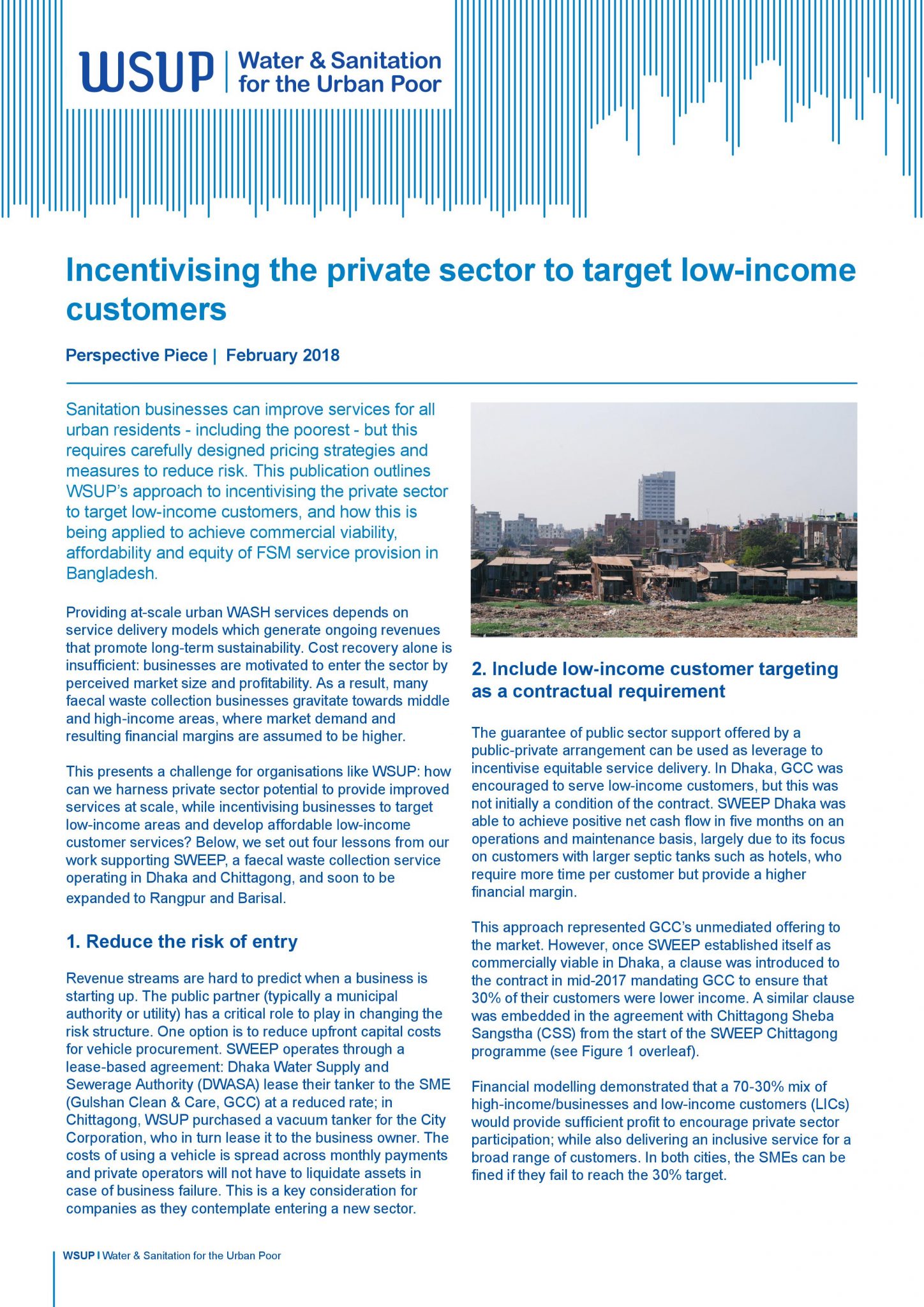
Sanitation businesses can improve services for all urban residents – including the poorest – but this requires carefully designed pricing strategies and measures to reduce risk. This publication outlines WSUP’s approach to incentivising the private sector...
by Polly Markandya | Mar 16, 2018
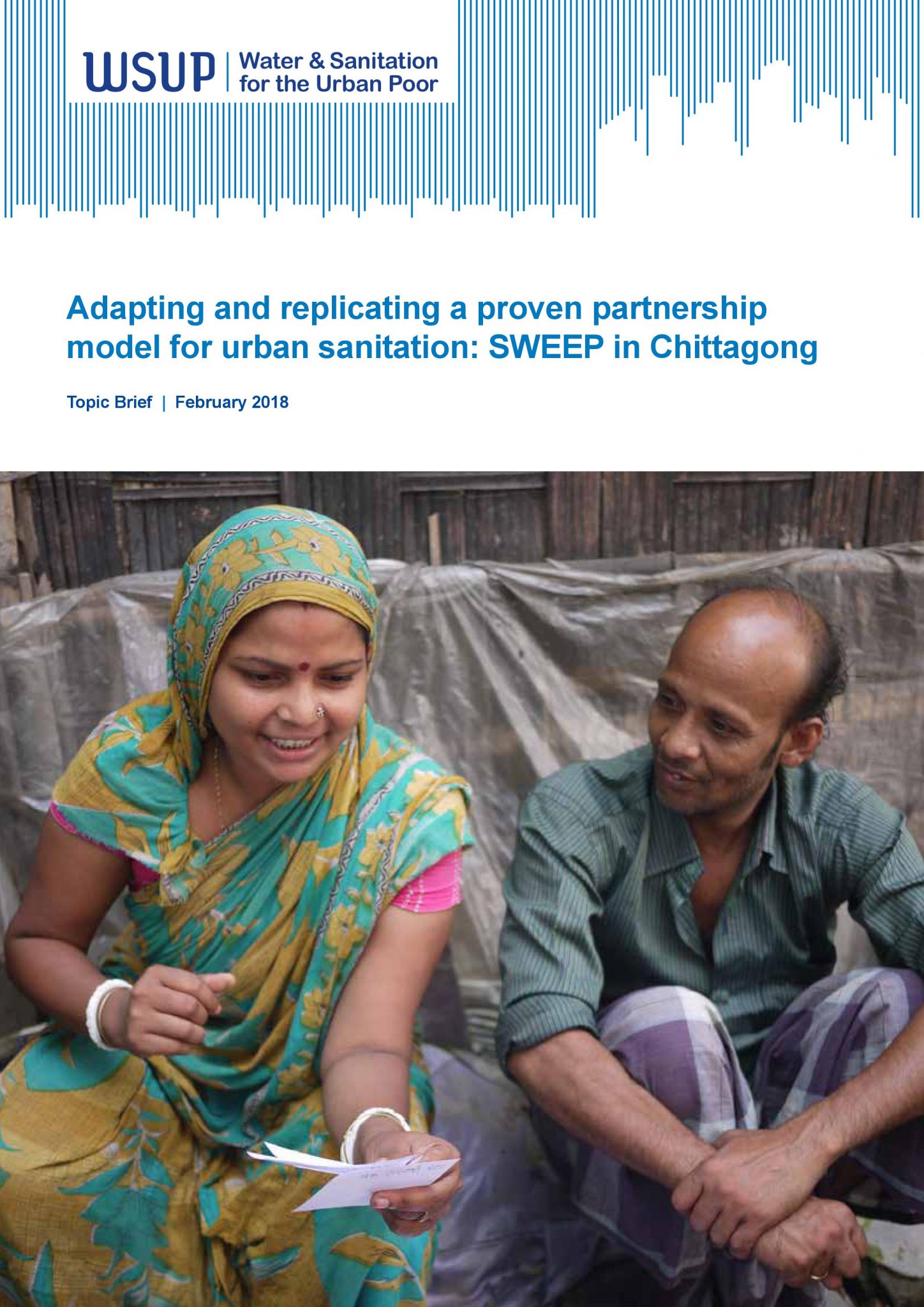
This Topic Brief explores the replication of a public-private partnership (PPP) that provides safe faecal sludge emptying and transport from on-site sanitation facilities such as pit latrines and septic tanks, marketed as ‘SWEEP’. Following a successful pilot period...
by Polly Markandya | Mar 15, 2018 | News
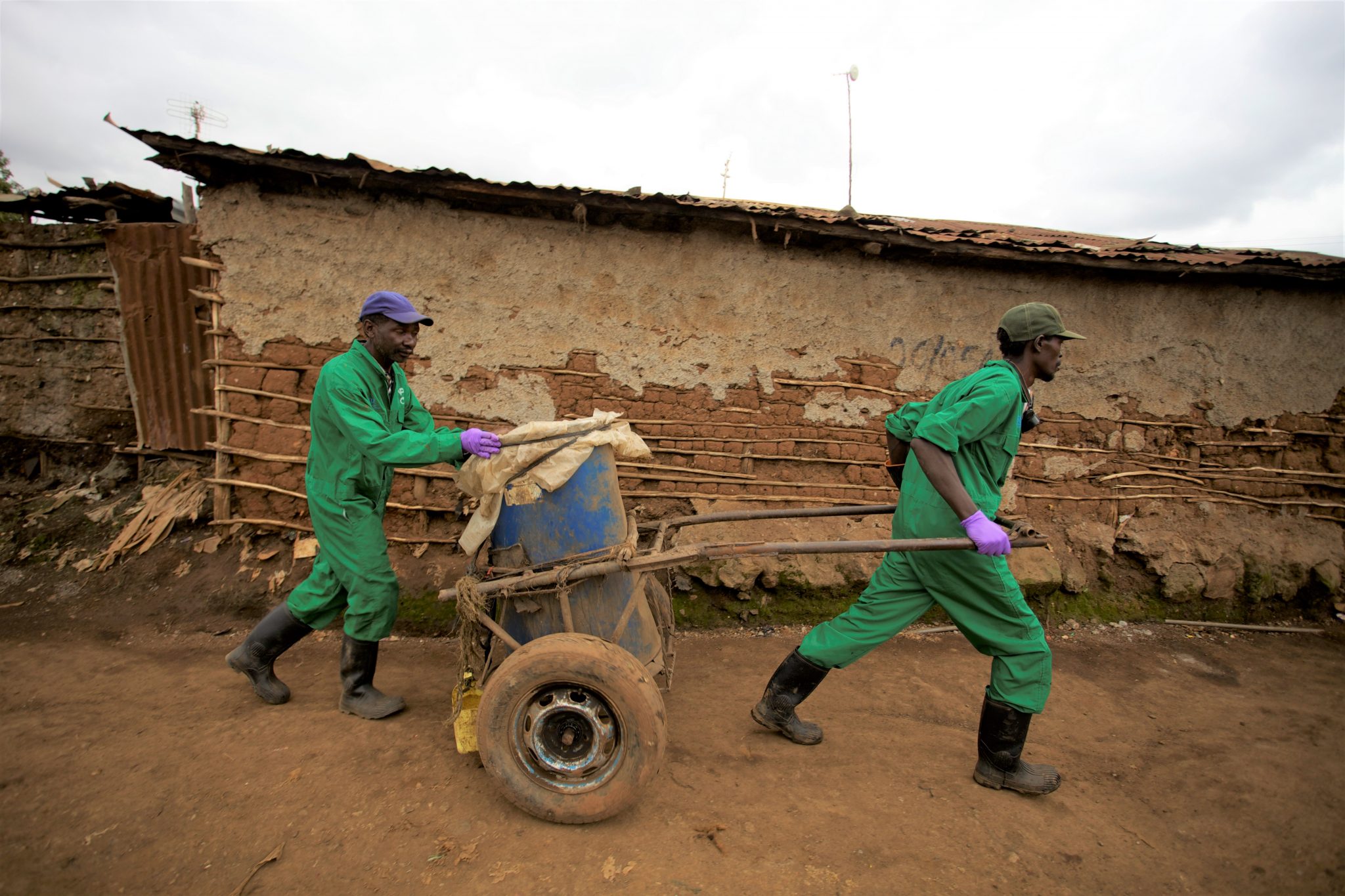
Kenya’s National Water Master Plan envisions 80% national sewerage coverage by 2030 – ambitious, as only 35% of urban Kenyans currently have access to basic sanitation. Motivated and influential stakeholders like the Water Services Regulatory Board (WASREB), the body...