
by Polly Markandya | Feb 12, 2018 | News
Who should pay for sanitation? The consumers who use the service, the utilities in charge of providing it, or governments who are responsible for ensuring citizens can access safe facilities? Consumers pay to connect their homes to a sewer network, utilities use that...

by Polly Markandya | Feb 12, 2018
How can city officials plan (and pay) for sanitation improvements in their municipality? This Policy Brief summarises a literature review that explored the costs of various sanitation technologies. The review indicates that conventional sewer systems are the most...

by Polly Markandya | Feb 6, 2018 | News
On the 27th January, high-level stakeholders from three cities (Dhaka, Chittagong and Rangpur) in Bangladesh came together to discuss the findings of a research project commissioned by WSUP’s Urban Sanitation Research Initiative and delivered by ITN-BUET. This project...

by Polly Markandya | Jan 31, 2018 | News
Improving public health is one of the primary reasons for investing in sanitation infrastructure like sewer networks or sludge treatment plants. This makes sense: minimising contact with faeces almost certainly means that fewer people will get sick from diseases like...
by Polly Markandya | Jan 31, 2018
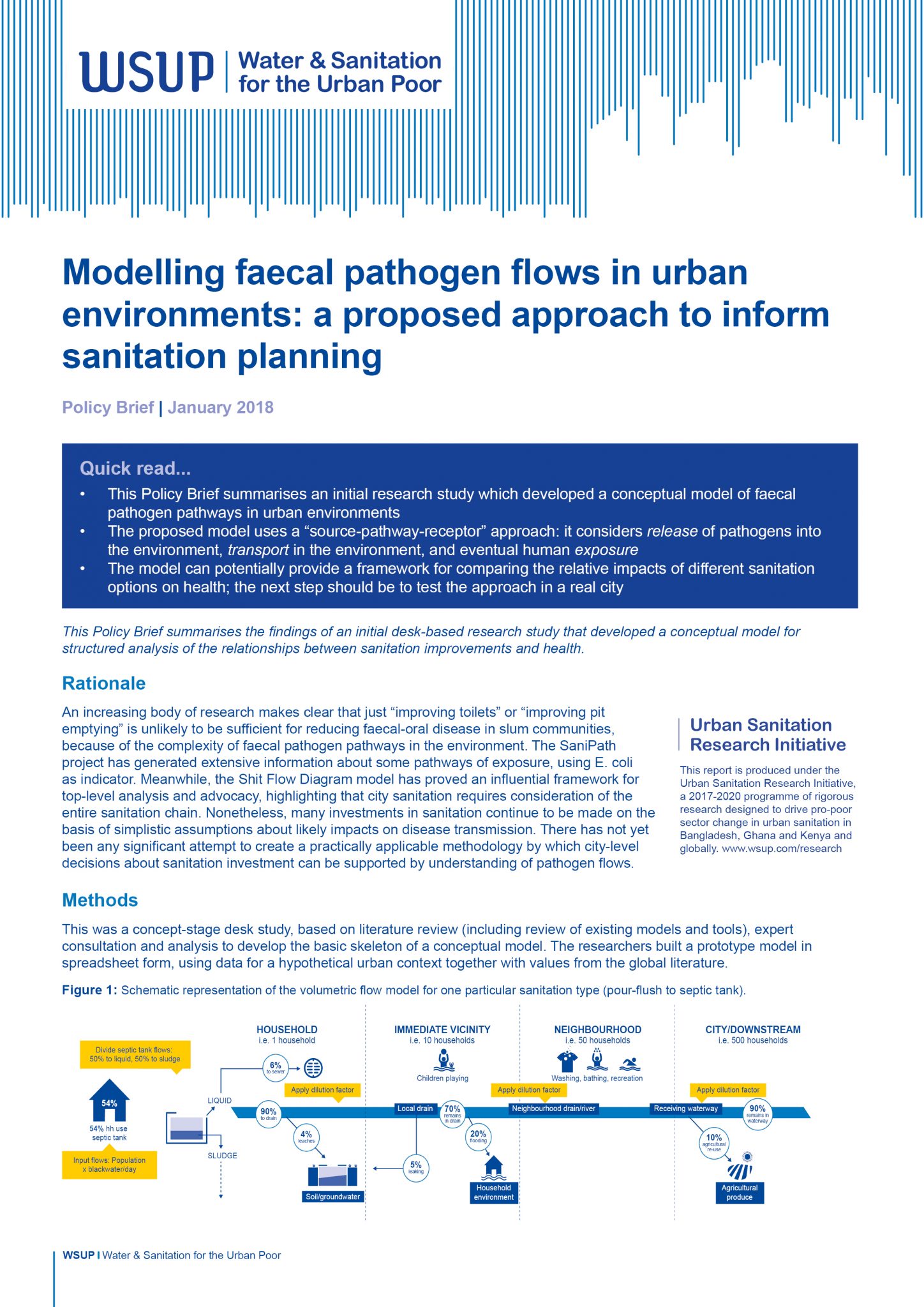
Creating a methodology so city-level sanitation investment decisions can be supported by a better understanding of pathogen flows This Policy Brief summarises an initial research study which developed a conceptual model of faecal pathogen pathways in urban...