by Polly Markandya | Mar 15, 2018 | News
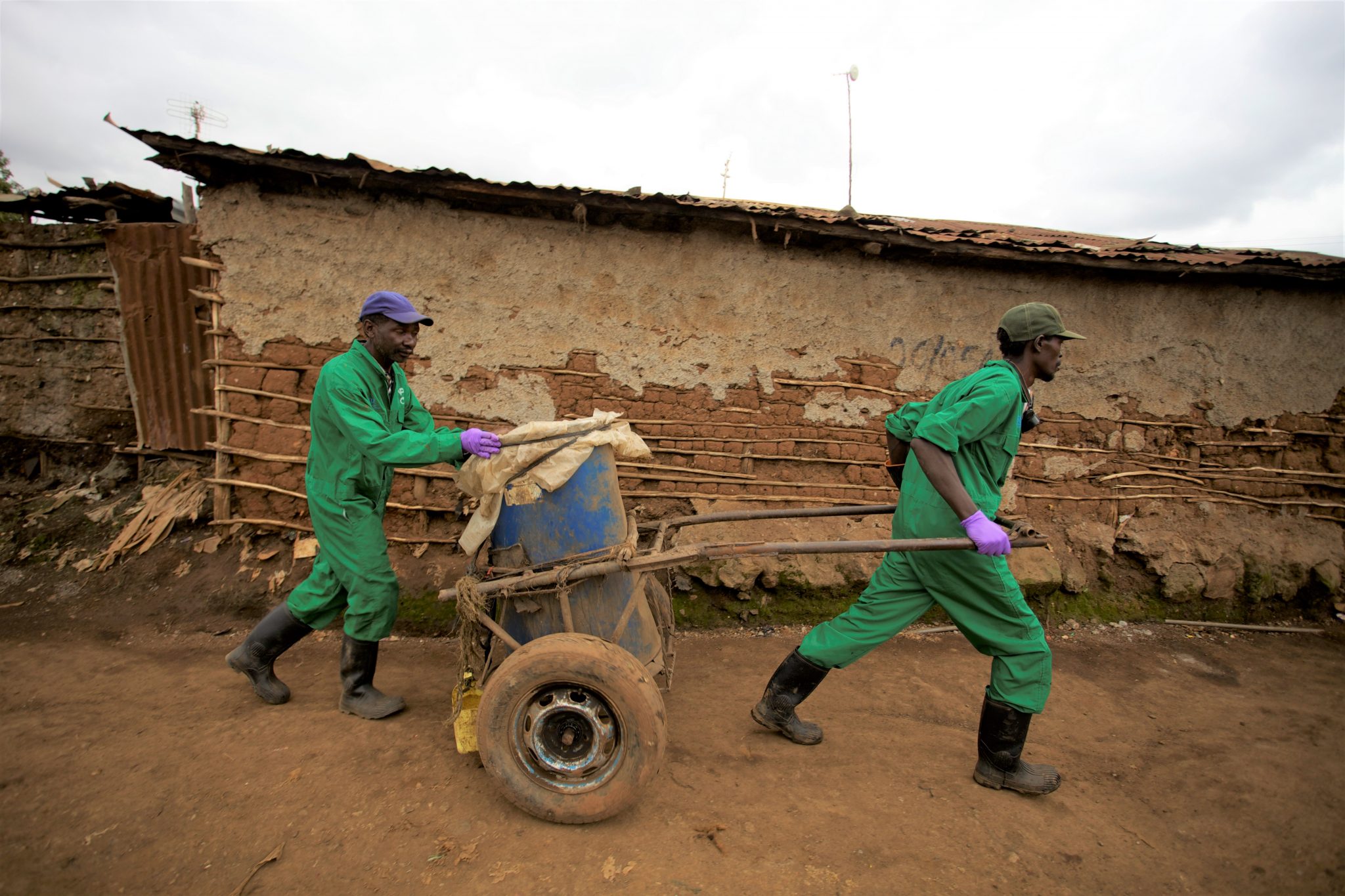
Kenya’s National Water Master Plan envisions 80% national sewerage coverage by 2030 – ambitious, as only 35% of urban Kenyans currently have access to basic sanitation. Motivated and influential stakeholders like the Water Services Regulatory Board (WASREB), the body...
by Polly Markandya | Mar 15, 2018
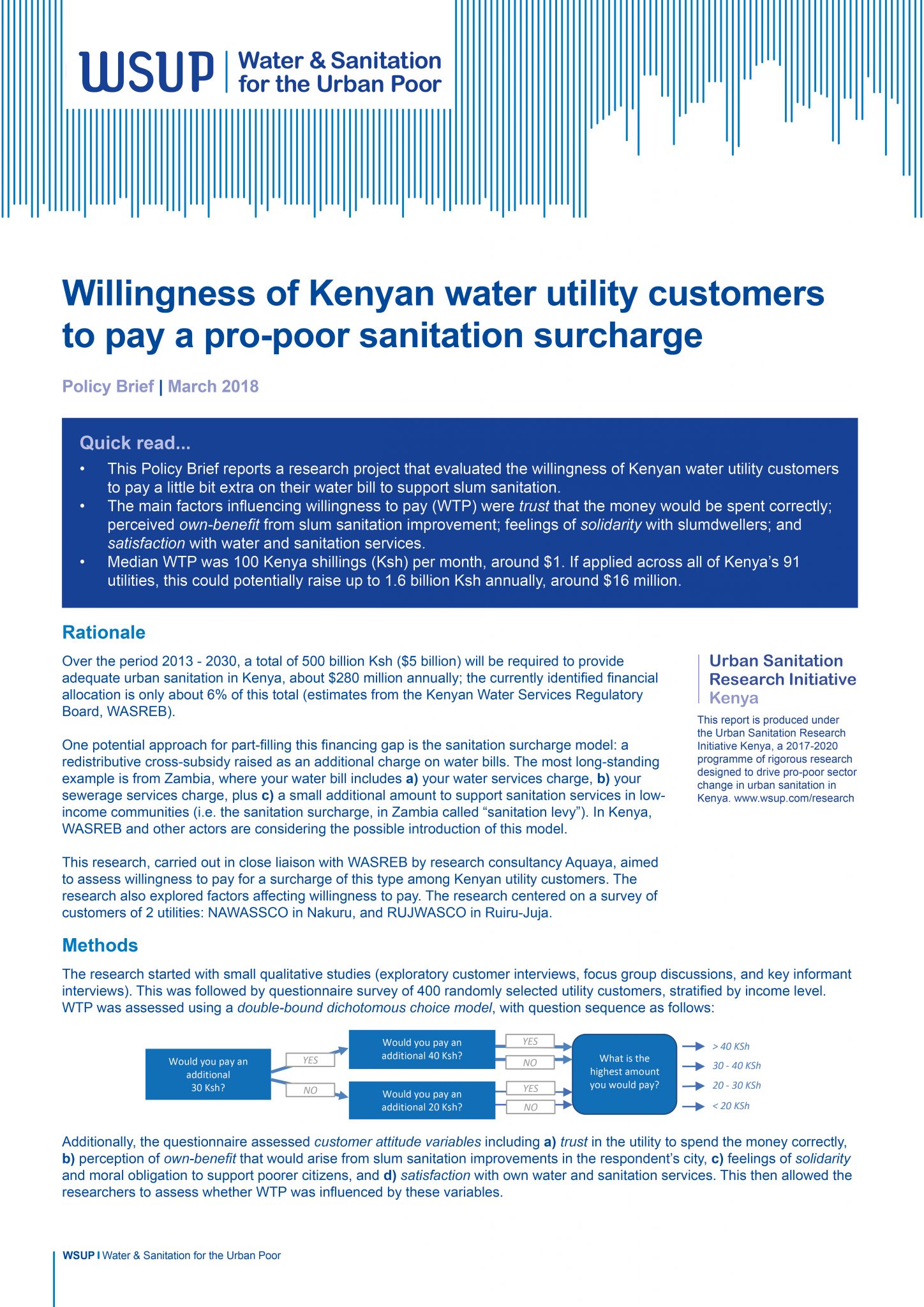
Evaluating the willingness of Kenyan water utility customers to pay a little bit extra on their water bill to support slum sanitation. This Policy Brief explores the main factors that influence willingness to pay (WTP) among utility customers to pay a hypothetical...
by Polly Markandya | Feb 12, 2018 | News
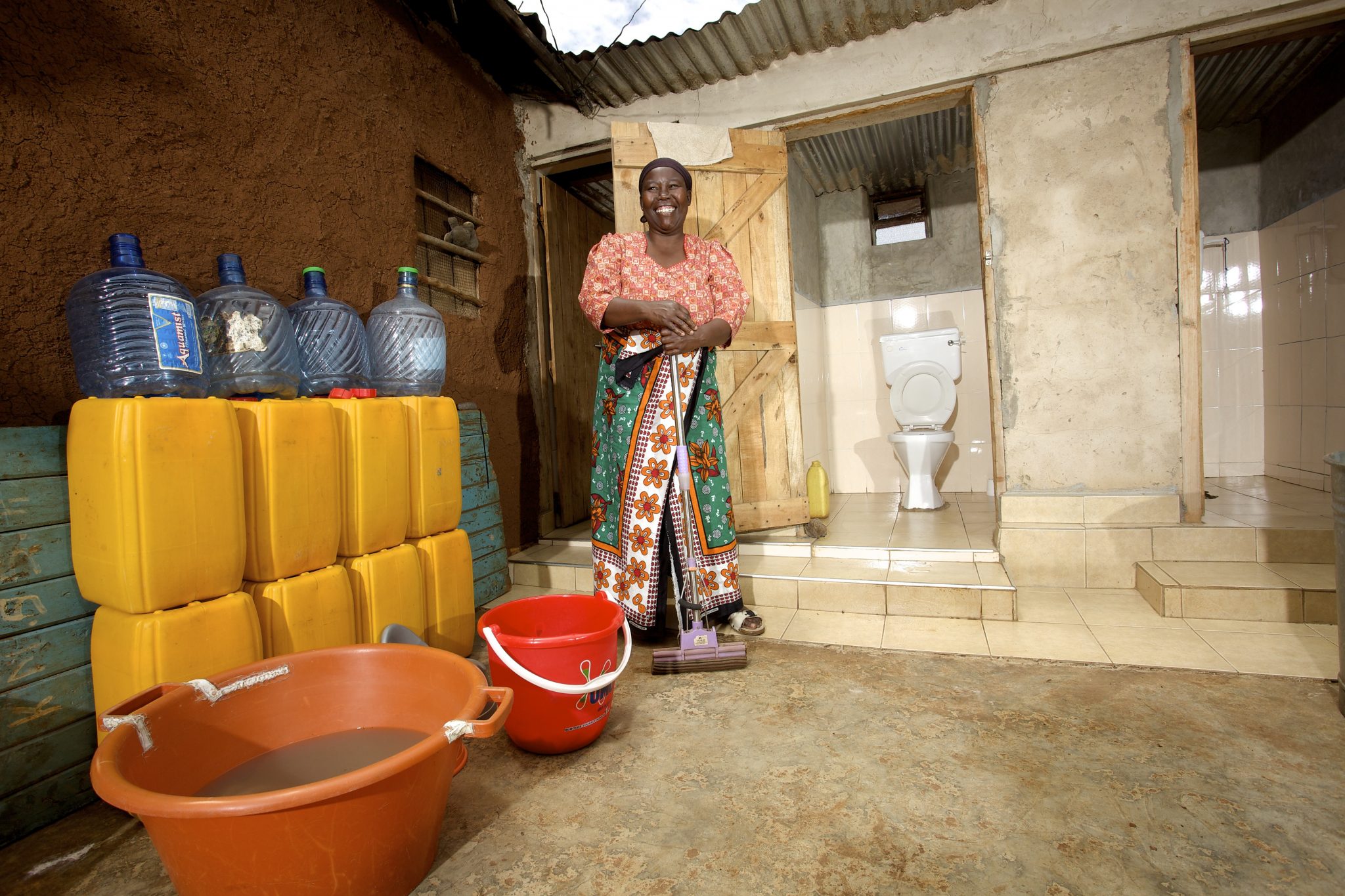
Who should pay for sanitation? The consumers who use the service, the utilities in charge of providing it, or governments who are responsible for ensuring citizens can access safe facilities? Consumers pay to connect their homes to a sewer network, utilities use that...
by Polly Markandya | Feb 6, 2018 | News
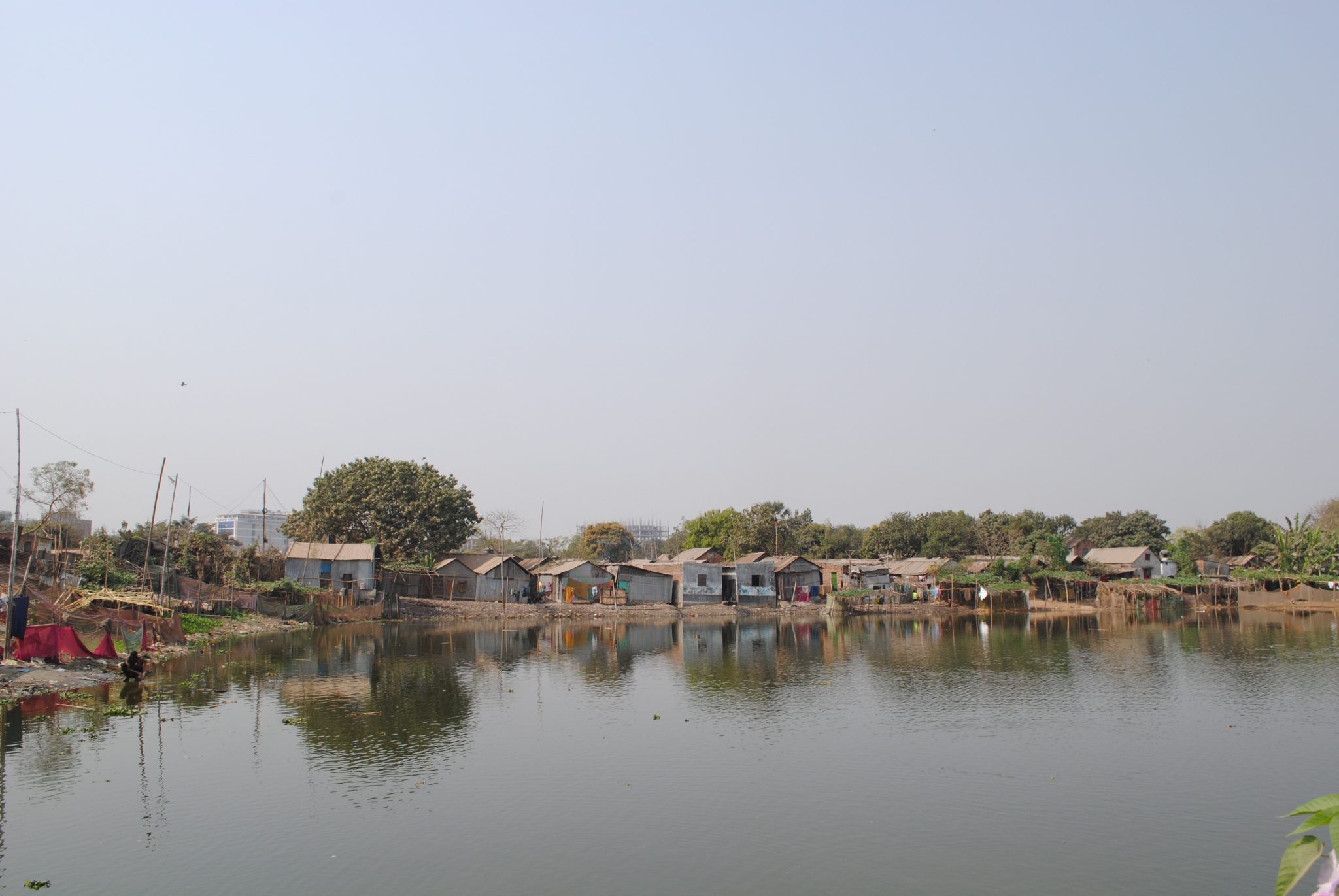
On the 27th January, high-level stakeholders from three cities (Dhaka, Chittagong and Rangpur) in Bangladesh came together to discuss the findings of a research project commissioned by WSUP’s Urban Sanitation Research Initiative and delivered by ITN-BUET. This project...
by Polly Markandya | Jul 10, 2017
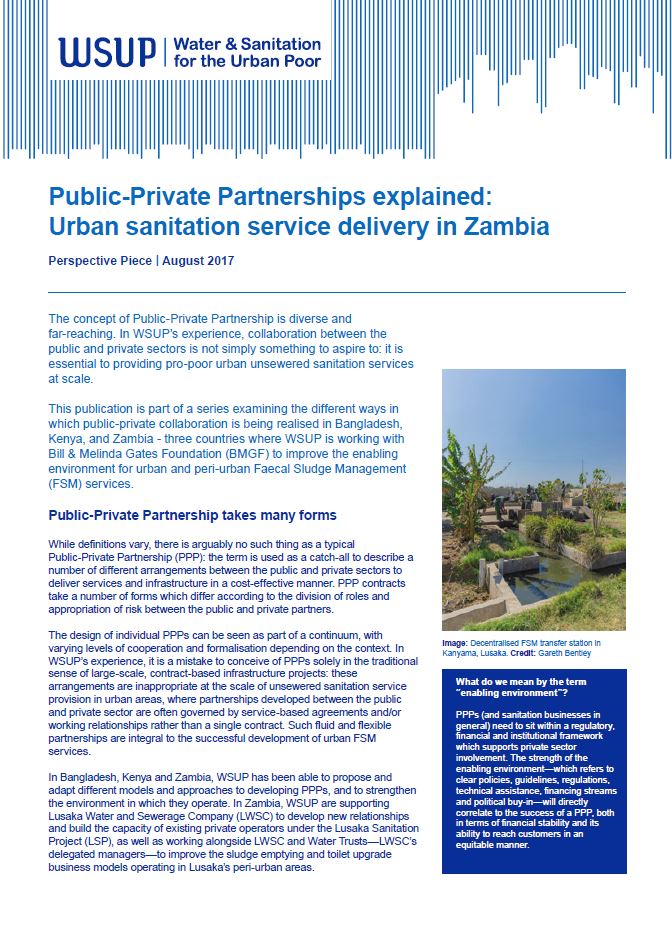
This publication is part of a series examining the different ways in which public-private collaboration is being realised in Bangladesh, Kenya, and Zambia – three countries where WSUP is working with Bill & Melinda Gates Foundation (BMGF) to improve the enabling...