by Polly Markandya | May 6, 2021
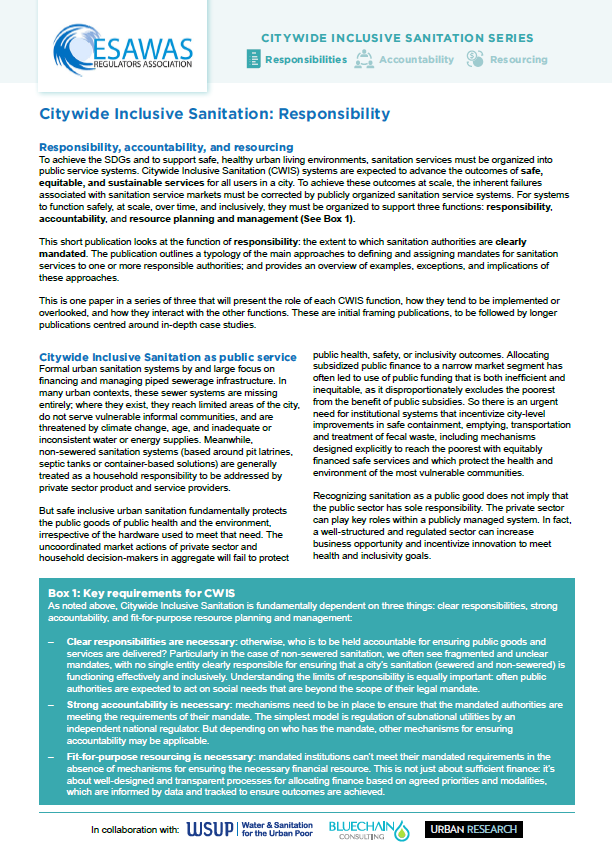
For urban sanitation systems to function safely, at scale, over time, and inclusively, they must be organized to support three functions: responsibility, accountability, and resource planning and management. This short publication looks at the function...
by Polly Markandya | Sep 22, 2020
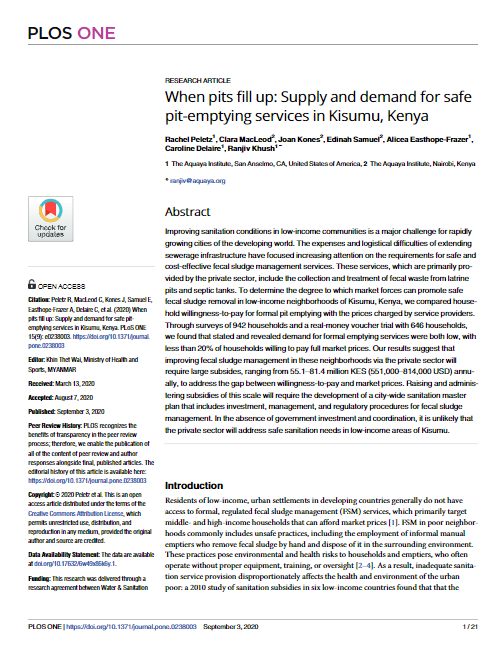
Improving sanitation conditions in low-income communities is a major challenge in rapidly growing cities of the developing world. To determine the degree through which market forces can promote safe fecal sludge removal in low-income neighbourhoods of Kisumu, Kenya,...
by Polly Markandya | Aug 22, 2020
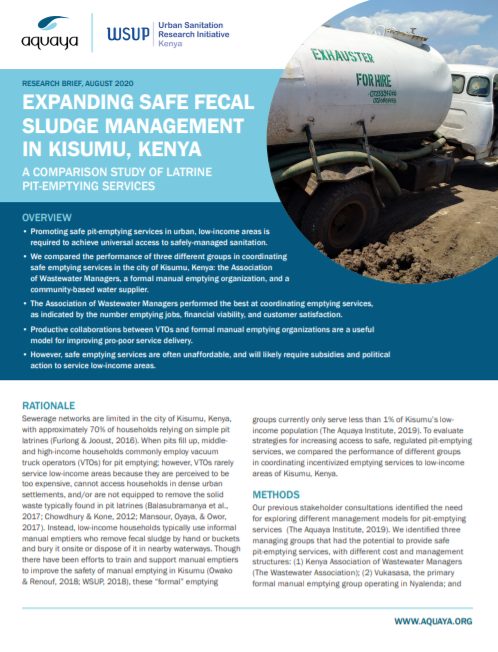
Promoting safe pit-emptying services in urban, low-income areas is required to achieve universal access to safely-managed sanitation. To evaluate strategies for increasing access to safe, regulated pit-emptying services, this study compared the performance of...
by Polly Markandya | Aug 21, 2020
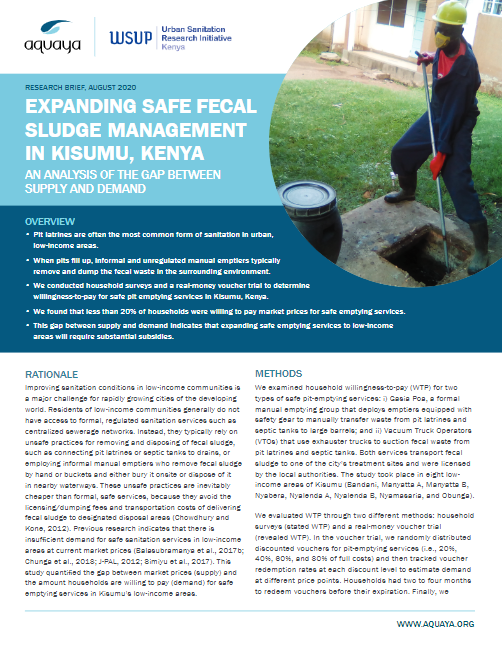
Improving sanitation conditions in low-income communities is a major challenge for rapidly growing cities of the developing world. Residents of low-income communities generally do not have access to formal, regulated sanitation services such as centralized sewerage...
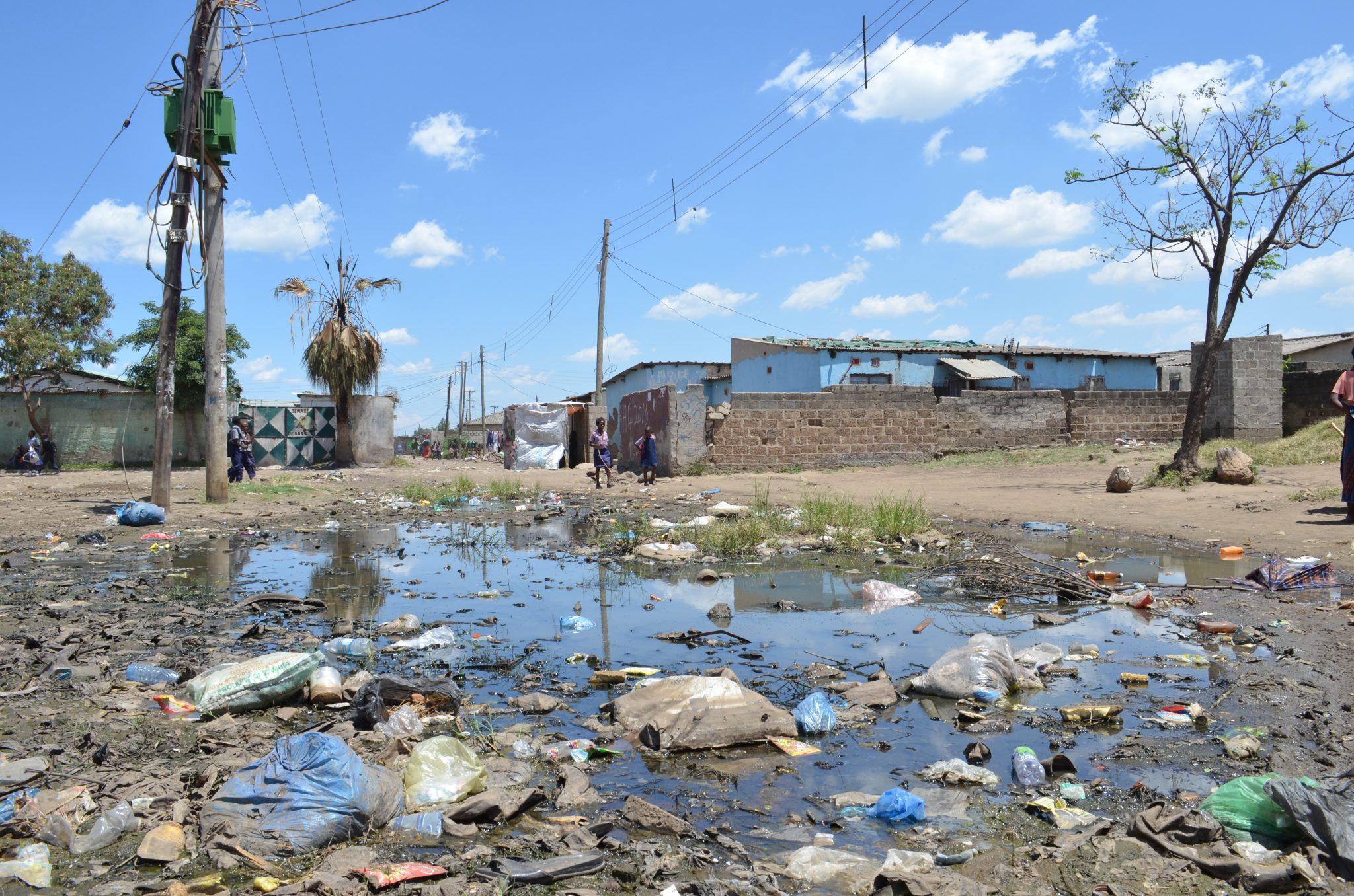
by Polly Markandya | Jun 2, 2020 | News
A new report published by Water & Sanitation for Urban Populations (WSUP) and the Eastern and Southern Africa Water and Sanitation (ESAWAS) Regulators Association identifies how stronger regulators can play an important role in improving sanitation for...