• About us
    • Our Story
    • How we create impact
    • Why WASH matters
      • Health
      • Education
      • Employment and economy
      • Women & girls
      • Climate change
      • Environmental pollution
    • Our team
    • Accountability and financials
      • Governance
      • Financials
    • Contact us
  • Where we work
    • Bangladesh
    • Ghana
    • Kenya
    • Madagascar
    • Mozambique
    • Zambia
    • Uganda
  • Partner with us
  • Resources
    • Latest research
      • Innovative approaches to water & sanitation service delivery
      • Institutional capacity
      • Business development & public-private collaboration
      • Policy, planning & sector reform
      • Regulation
      • Financing
      • Citywide inclusive sanitation
      • Integrating water & sanitation with urban development
      • Climate resilience & water security
      • Hygiene & behaviour change
      • Gender & inclusion
      • Assessing impact
    • Sector functionality framework
    • Utility strengthening framework
    • Academic collaborations
    • WSUP’s Theory of Change
  • Advisory
    • About WSUP Advisory
    • Services
    • Areas of expertise
    • Projects
    • Meet the team
    • Contact Advisory
  • Media Centre
    • Browse all
  • Charity
    • Fundraise for WSUP
    • Pledge your birthday
    • In-memory or celebration
    • Leave a gift in your Will
  • Careers
    • Vacancies
  • About us
    • Our Story
    • How we create impact
    • Why WASH matters
      • Health
      • Education
      • Employment and economy
      • Women & girls
      • Climate change
      • Environmental pollution
    • Our team
    • Accountability and financials
      • Governance
      • Financials
    • Contact us
  • Where we work
    • Bangladesh
    • Ghana
    • Kenya
    • Madagascar
    • Mozambique
    • Zambia
    • Uganda
  • Partner with us
  • Resources
    • Latest research
      • Innovative approaches to water & sanitation service delivery
      • Institutional capacity
      • Business development & public-private collaboration
      • Policy, planning & sector reform
      • Regulation
      • Financing
      • Citywide inclusive sanitation
      • Integrating water & sanitation with urban development
      • Climate resilience & water security
      • Hygiene & behaviour change
      • Gender & inclusion
      • Assessing impact
    • Sector functionality framework
    • Utility strengthening framework
    • Academic collaborations
    • WSUP’s Theory of Change
  • Advisory
    • About WSUP Advisory
    • Services
    • Areas of expertise
    • Projects
    • Meet the team
    • Contact Advisory
  • Media Centre
    • Browse all
  • Charity
    • Fundraise for WSUP
    • Pledge your birthday
    • In-memory or celebration
    • Leave a gift in your Will
  • Careers
    • Vacancies
How can we influence municipal governments to allocate more money to sanitation?

How can we influence municipal governments to allocate more money to sanitation?

by Polly Markandya | May 17, 2015

Improving urban sanitation requires big investment by municipal as well as national government: but in most African cities, sanitation receives less than 1% of the total municipal budget. This Practice Note reports ongoing research around how to encourage greater...
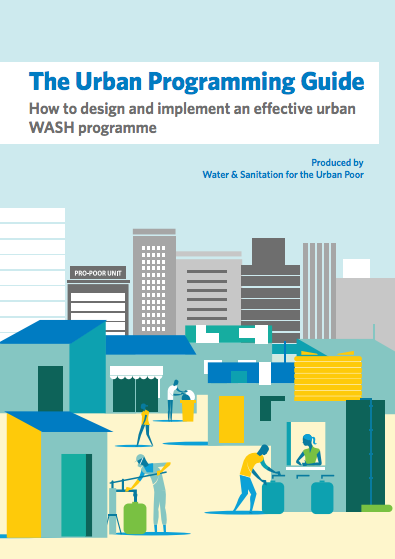
The Urban Programming Guide: How to design and implement an effective urban WASH programme

The Urban Programming Guide: How to design and implement an effective urban WASH programme

by Polly Markandya | Mar 17, 2014

What is this guide? The guide provides an introduction to urban WASH programming: how to design and implement a pro-poor urban water, sanitation and hygiene programme. The recommendations are drawn primarily from WSUP’s extensive experience in sub-Saharan Africa and...
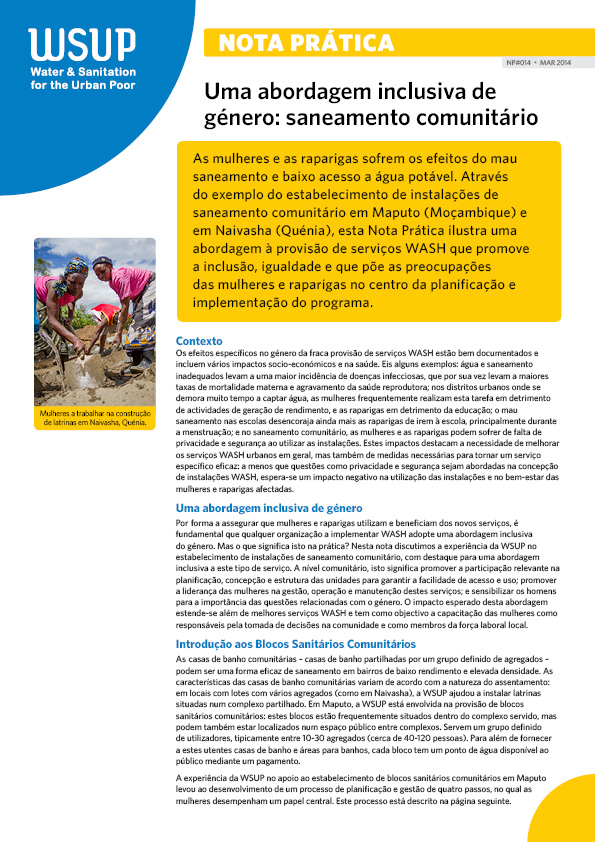
Uma abordagem inclusiva de género: saneamento comunitário

Uma abordagem inclusiva de género: saneamento comunitário

by Polly Markandya | Mar 17, 2014

As mulheres e as raparigas sofrem os efeitos do mau saneamento e baixo acesso a água potável. Através do exemplo do estabelecimento de instalações de saneamento comunitário em Maputo (Moçambique) e em Naivasha (Quénia), esta Nota Prática ilustra uma abordagem à...
Uma abordagem inclusiva de género: saneamento comunitário

A gender-inclusive approach in practice: communal sanitation

by Polly Markandya | Mar 17, 2014

Women and girls suffer disproportionately from the effects of poor sanitation and lack of access to clean water. Through the example of establishing communal sanitation facilities in Maputo (Mozambique) and Naivasha (Kenya), this Practice Note illustrates how WASH...
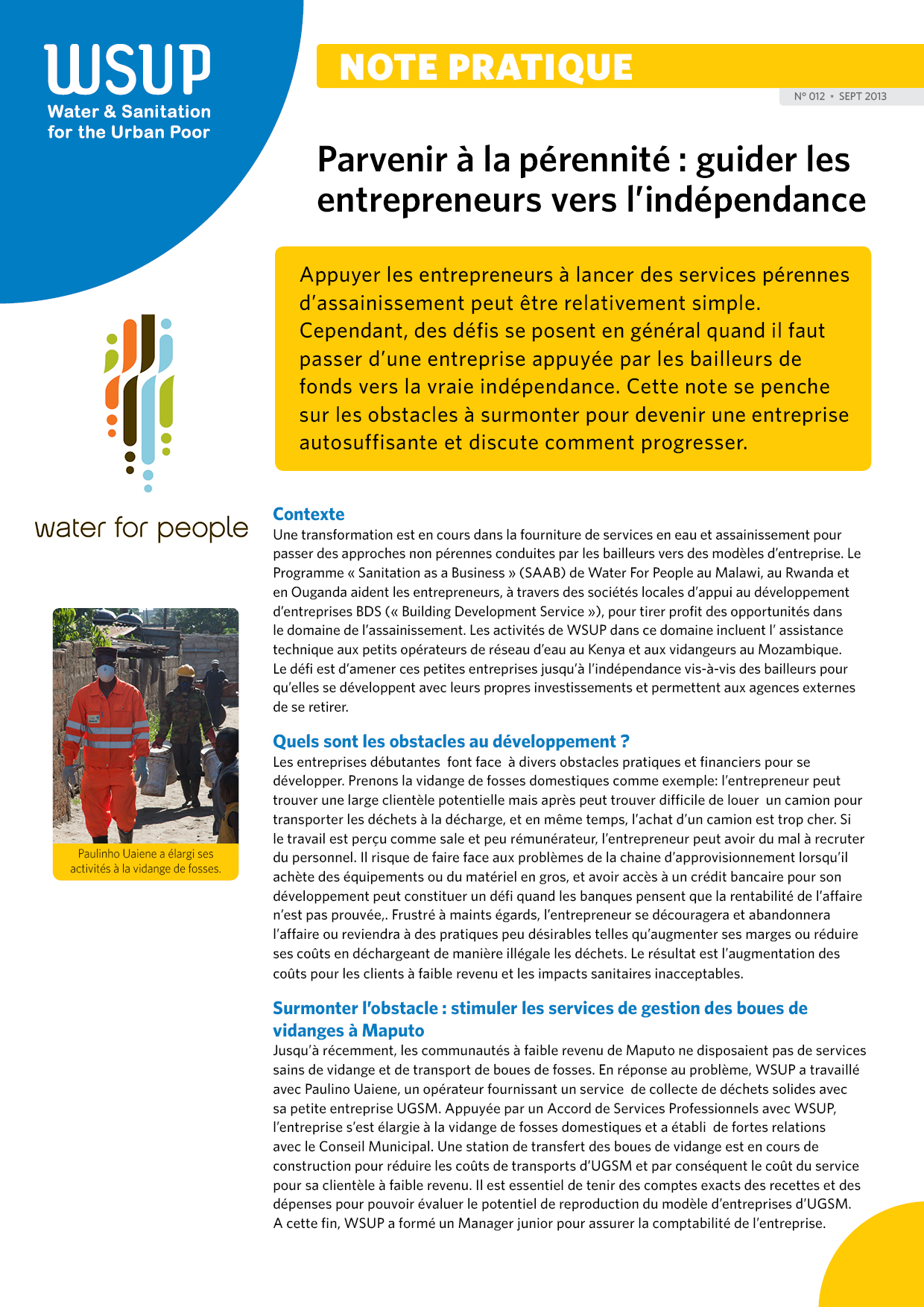
Parvenir à la pérennité : guider les entrepreneurs vers l’indépendance

Parvenir à la pérennité : guider les entrepreneurs vers l’indépendance

by Polly Markandya | Sep 17, 2013

Appuyer les entrepreneurs à lancer des services pérennes d’assainissement peut être relativement simple. Cependant, des défis se posent en général quand il faut passer d’une entreprise appuyée par les bailleurs de fonds vers la vraie indépendance. Cette note se penche...

Page 17 of 21« First«...10...1516171819...»Last »

Support our work

Donate now

Newsletter

Sign up to receive updates

Sign up

Tags

2021 africa digital Ghana groundwater Hygiene Kenya partnerships regulation Sanitation sewers smart water technology Water world water day world water week
Sign up for our Newsletter to receive all the latest WSUP news straight to your inbox

International secretariat registered at:

124 City Road, London, EC1V 2NX, UK

Companies House 05419428

WSUP Charity 1170651
  • About us
  • Where we work
  • Partner with us
  • Advisory
  • Media Centre
  • Resources
  • Careers
  • Charity




© WSUP
  • Cookie Policy
  • Privacy Notice
  • Policies
  • Report a Concern