• About us
    • Our Story
    • How we create impact
    • Why WASH matters
      • Health
      • Education
      • Employment and economy
      • Women & girls
      • Climate change
      • Environmental pollution
    • Our team
    • Accountability and financials
      • Governance
      • Financials
    • Contact us
  • Where we work
    • Bangladesh
    • Ghana
    • Kenya
    • Madagascar
    • Mozambique
    • Zambia
    • Uganda
  • Partner with us
  • Resources
    • Latest research
      • Innovative approaches to water & sanitation service delivery
      • Institutional capacity
      • Business development & public-private collaboration
      • Policy, planning & sector reform
      • Regulation
      • Financing
      • Citywide inclusive sanitation
      • Integrating water & sanitation with urban development
      • Climate resilience & water security
      • Hygiene & behaviour change
      • Gender & inclusion
      • Assessing impact
    • Sector functionality framework
    • Utility strengthening framework
    • Academic collaborations
    • WSUP’s Theory of Change
  • Advisory
    • About WSUP Advisory
    • Services
    • Areas of expertise
    • Projects
    • Meet the team
    • Contact Advisory
  • Media Centre
    • Browse all
  • Charity
    • Fundraise for WSUP
    • Pledge your birthday
    • In-memory or celebration
    • Leave a gift in your Will
  • Careers
    • Vacancies
  • About us
    • Our Story
    • How we create impact
    • Why WASH matters
      • Health
      • Education
      • Employment and economy
      • Women & girls
      • Climate change
      • Environmental pollution
    • Our team
    • Accountability and financials
      • Governance
      • Financials
    • Contact us
  • Where we work
    • Bangladesh
    • Ghana
    • Kenya
    • Madagascar
    • Mozambique
    • Zambia
    • Uganda
  • Partner with us
  • Resources
    • Latest research
      • Innovative approaches to water & sanitation service delivery
      • Institutional capacity
      • Business development & public-private collaboration
      • Policy, planning & sector reform
      • Regulation
      • Financing
      • Citywide inclusive sanitation
      • Integrating water & sanitation with urban development
      • Climate resilience & water security
      • Hygiene & behaviour change
      • Gender & inclusion
      • Assessing impact
    • Sector functionality framework
    • Utility strengthening framework
    • Academic collaborations
    • WSUP’s Theory of Change
  • Advisory
    • About WSUP Advisory
    • Services
    • Areas of expertise
    • Projects
    • Meet the team
    • Contact Advisory
  • Media Centre
    • Browse all
  • Charity
    • Fundraise for WSUP
    • Pledge your birthday
    • In-memory or celebration
    • Leave a gift in your Will
  • Careers
    • Vacancies
Mind the gap: Investigating the funding shortfall in urban sanitation

Mind the gap: Investigating the funding shortfall in urban sanitation

by Polly Markandya | Feb 12, 2018 | News

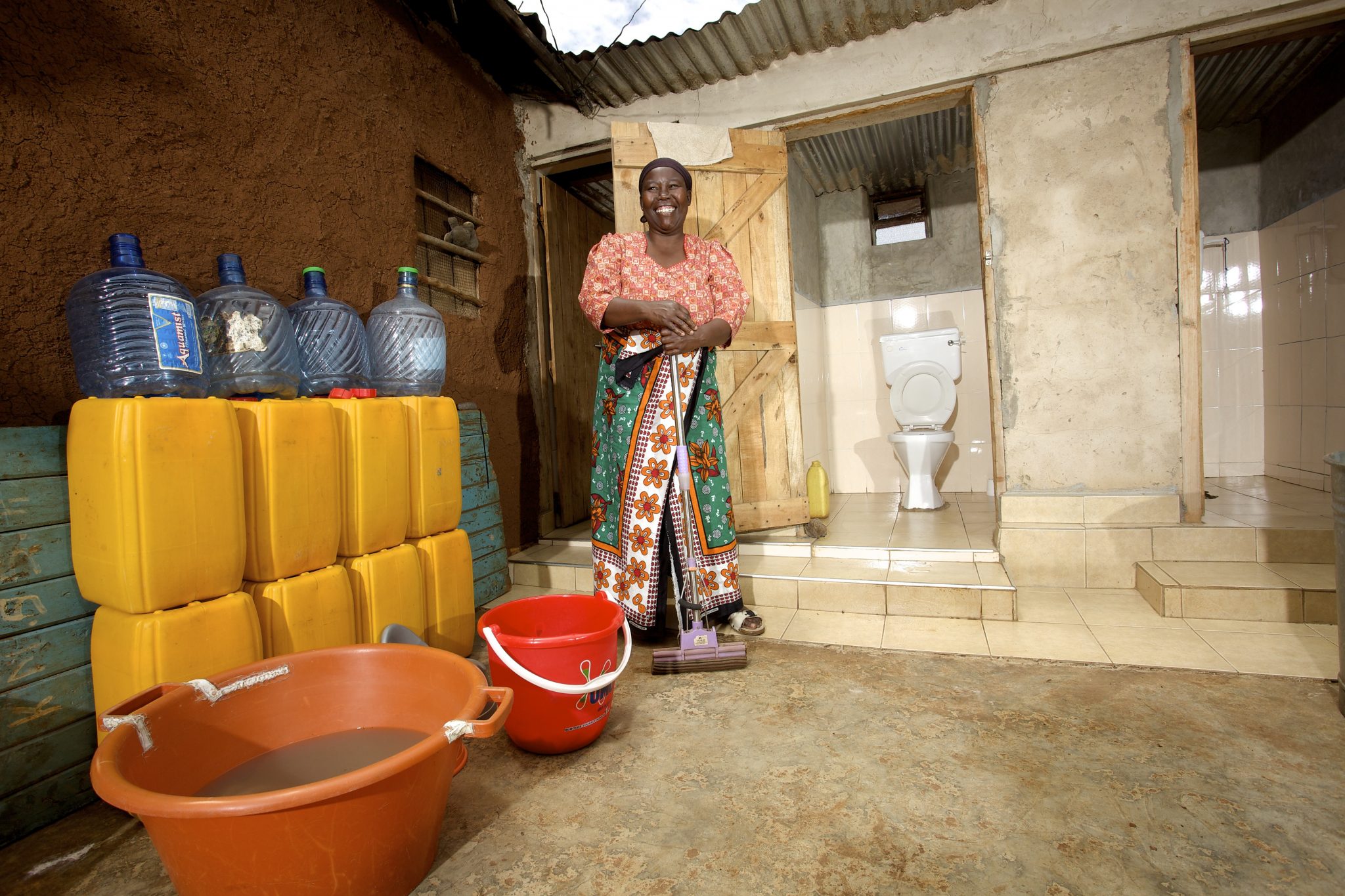
Who should pay for sanitation? The consumers who use the service, the utilities in charge of providing it, or governments who are responsible for ensuring citizens can access safe facilities? Consumers pay to connect their homes to a sewer network, utilities use that...
The PULA app: a customer acquisition and tracking tool for vacuum tanker businesses

The PULA app: a customer acquisition and tracking tool for vacuum tanker businesses

by Polly Markandya | Nov 13, 2017

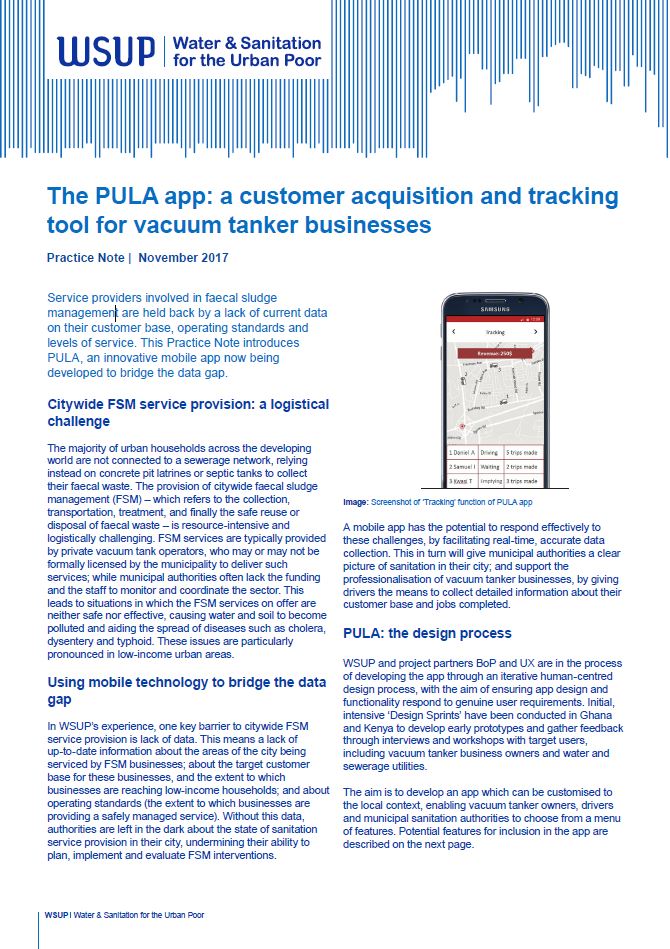
Service providers involved in faecal sludge management (FSM) are held back by a lack of current data on their customer base, operating standards and levels of service. This Practice Note introduces PULA, an innovative mobile app now being developed to bridge the data...
Barriers and opportunities for sanitation SMEs: a study of the wider market system in Ghana

Barriers and opportunities for sanitation SMEs: a study of the wider market system in Ghana

by Polly Markandya | Sep 21, 2017

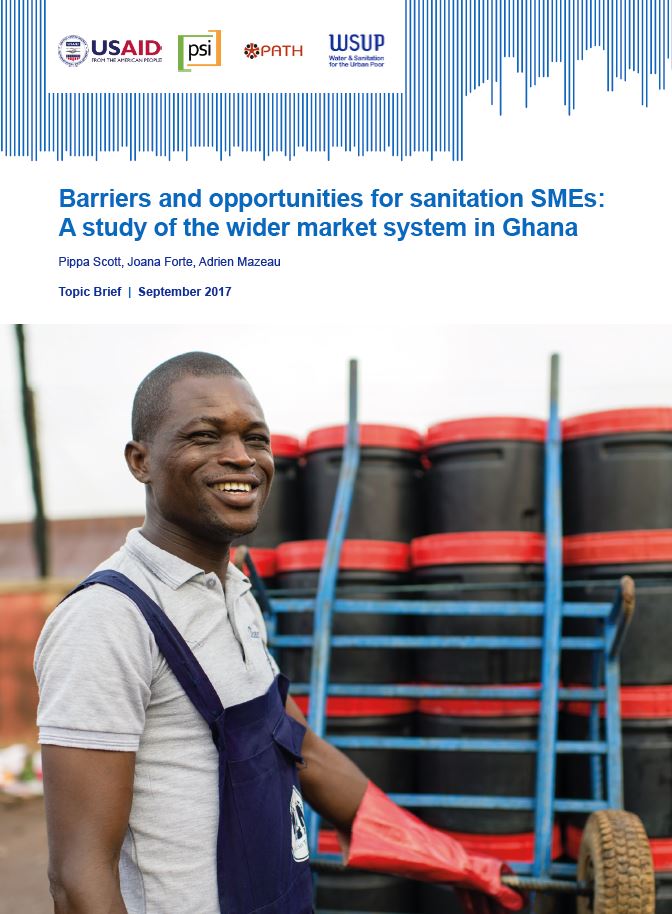
This Topic Brief presents a study of the wider market barriers and opportunities facing small and medium-sized enterprises (SMEs) in sanitation in Ghana. Conducted by i-San, the study aimed to understand the impact of these factors on the ability of businesses to...
Situation analysis of the urban sanitation sector in Ghana

Situation analysis of the urban sanitation sector in Ghana

by Polly Markandya | Jul 3, 2017

This report, part of WSUP’s Urban Sanitation Research Initiative, explores the background to the urban sanitation sector in Ghana. Summary of findings: Ghana is a fast-growing economy that has made notable progress in reducing poverty. Urban infrastructure has not...
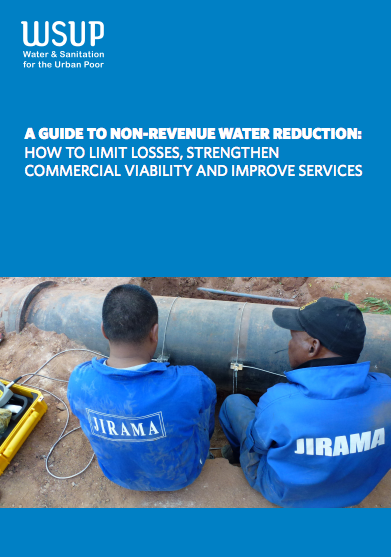
A guide to non-revenue water reduction: how to limit losses, strengthen commercial viability and improve services

A guide to non-revenue water reduction: how to limit losses, strengthen commercial viability and improve services

by Polly Markandya | May 18, 2017

This guide has been developed as a resource for water utilities to support implementation of Non-Revenue Water (NRW) reduction programmes. It covers what NRW is and why it matters, before providing systemic guidelines that can be adopted by utility managers, engineers...

Page 18 of 22« First«...10...1617181920...»Last »

Support our work

Donate now

Newsletter

Sign up to receive updates

Sign up

Tags

2021 africa digital Ghana groundwater Hygiene Kenya partnerships regulation Sanitation sewers smart water technology Water world water day world water week
Sign up for our Newsletter to receive all the latest WSUP news straight to your inbox

International secretariat registered at:

124 City Road, London, EC1V 2NX, UK

Companies House 05419428

WSUP Charity 1170651
  • About us
  • Where we work
  • Partner with us
  • Advisory
  • Media Centre
  • Resources
  • Careers
  • Charity




© WSUP
  • Cookie Policy
  • Privacy Notice
  • Policies
  • Report a Concern