
By Antony Ambugo
In Kenya’s push to become a middle-income country, one basic but critical element is being left behind: sanitation. Despite decades of social and economic progress, the country is far from achieving universal access to safely managed sanitation. Open defecation persists in parts of the country. Toilets are still considered a luxury by too many. Yet hiding in plain sight is one of Kenya’s greatest untapped engines of economic growth: the sanitation and menstrual health economy.
Kenya loses between 1 and 2 per cent of its gross domestic product every year due to poor sanitation. This equates to nearly US$1.5 billion lost annually through diminished productivity, healthcare costs, premature deaths, and environmental degradation (Sanitation and Hygiene Fund, 2024). This is not only a public health crisis, but also a glaring economic opportunity.
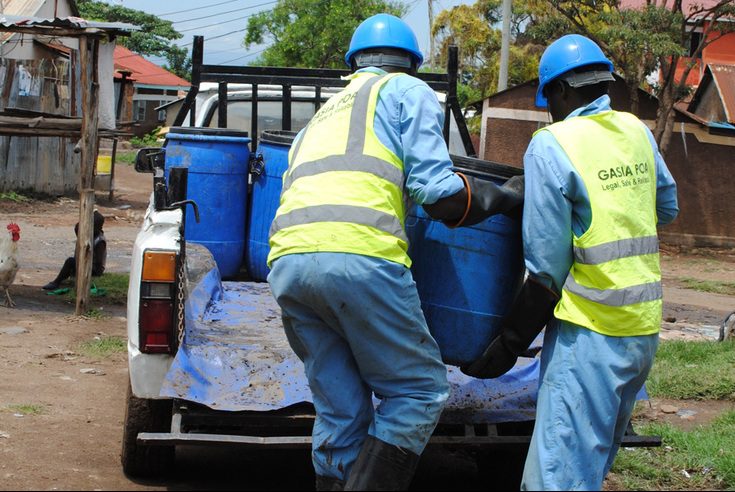
The total sanitation market in Kenya is currently valued at US$1.7 billion, with the potential to grow to US$2.8 billion if universal access is achieved (Sanergy, 2023). Approximately 90 per cent of this is tied to the toilet economy — a vast ecosystem ranging from construction and maintenance to faecal sludge management — much of which remains informal and under-leveraged.
Signs of progress are emerging. Circular sanitation businesses that convert human waste into energy, compost, or fuel are gaining traction. Smart sanitation technologies such as digital waste tracking are creating new opportunities for managing and monetising waste streams. These innovations are not only job creators, but also help reduce greenhouse gas emissions, preserve water resources, and build climate resilience. The Sanitation and Hygiene Fund (2024) identifies climate-smart sanitation as among the most cost-effective mitigation investments available to low- and middle-income countries.
Menstrual health, long overlooked in development discourse and budgeting, is sanitation. It affects school attendance, productivity, and personal dignity. Increasingly, menstrual hygiene is recognised as a public good, not a private matter. Recent findings from the World Bank (2023) reveal that countries investing in menstrual hygiene products, waste management, and inclusive sanitation facilities experience better educational outcomes for girls and improved female workforce participation. In Kenya, where 65 per cent of women and girls cannot afford sanitary products (Menstrual Health Hub, 2024), the impact of addressing this gap could be transformational.

Why then is Kenya’s sanitation economy still underdeveloped?
One reason is financing. Sanitation infrastructure requires substantial upfront investment, and its returns are often long-term. Yet every US dollar invested in sanitation yields at least five dollars in social and economic benefits (World Health Organization, 2023). These benefits include fewer sick days, lower healthcare costs, increased productivity, and healthier environments. Sanitation is not charity. It is a catalytic investment.
There are also structural barriers. Sanitation is fragmented across ministries and neglected in many county budgets. The private sector, despite its potential, lacks incentives, financing mechanisms, and regulatory support. Informal businesses that provide critical services such as pit latrine emptying or reusable menstrual product sales operate in legal grey zones, without protections or pathways to scale.
Donors and investors must step up. To unlock the full potential of Kenya’s sanitation and menstrual health economy, three key shifts are needed.
First, funding must increase. This includes higher domestic allocations, continued donor commitments, and creative use of blended finance to de-risk private sector involvement. Second, innovation must be accelerated through research, start-up incubation, and partnerships with academia and the tech sector. Third, strong policy reform is essential. Sanitation must be mainstreamed across all levels of national and county planning, and menstrual health must be fully integrated into WASH strategies.
The upcoming AfricaSan 8 Conference presents an opportunity for Kenya to lead by example. The country has the energy, the entrepreneurs, and the urgency. What is needed now is political resolve and sustained donor support.
No economy can prosper while its citizens lack access to basic sanitation or menstrual dignity. Donors have a unique opportunity to fix a broken system while powering a multi-billion-dollar market that improves lives, protects public health, and strengthens climate resilience.
The question is no longer whether sanitation and menstrual health matter. It is whether we will act in time to shape these sectors for impact.
Antony Ambugo is the Country Manager, WSUP Kenya.
References
Menstrual Health Hub (2024). Kenya Country Profile: Menstrual Health Equity. [online] Available at: https://mhhub.org/kenya-country-profile [Accessed 4 Aug. 2025].
Sanergy (2023). The Sanitation Economy in Kenya: Scaling Solutions for Urban Growth. [online] Available at: https://www.sanergy.com/reports/kenya-sanitation-economy [Accessed 4 Aug. 2025].
Sanitation and Hygiene Fund (2024). Investing in Climate-Smart Sanitation: A Call to Action. [online] Available at: https://www.shfund.org/resources/climate-smart-sanitation-2024 [Accessed 4 Aug. 2025].
World Bank (2023). Menstrual Hygiene and Economic Inclusion: Global Evidence and Case Studies. [online] Available at: https://www.worldbank.org/en/topic/water/publication/menstrual-hygiene [Accessed 4 Aug. 2025].
World Health Organization (2023). Economic Returns on Sanitation Investments. [online] Available at: https://www.who.int/publications/sanitation-investment-returns [Accessed 4 Aug. 2025].